Complex clean-up of weapons waste progresses at the Hanford Site
By Heather Hansman
The grasslands at the Hanford Site in south central Washington seem like they stretch on forever: east toward the Columbia River and north toward the Hanford Reach National Monument and wildlife refuge. It looks like a wild, untouched expanse. But the site is one of the most polluted places on earth.
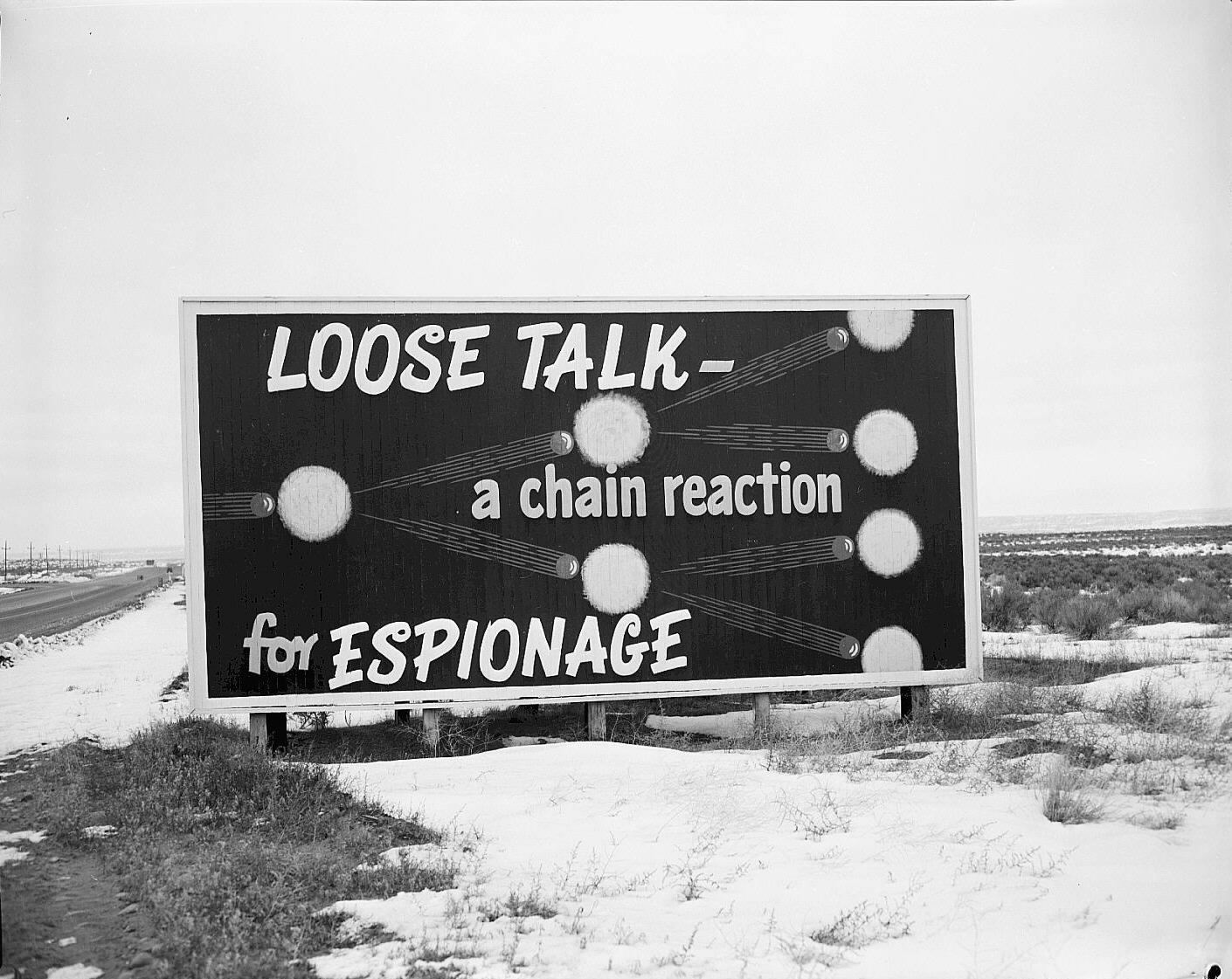
Hanford was part of the Manhattan Project, selected in 1943 to produce plutonium for the classified federal program racing to be the first to develop nuclear weapons. The site was remote, so it could be kept secret, and there was cold water to cool the nuclear reactors, thanks to the nearby river. There was also plenty of room to bring in the 55,000 workers who became necessary to the project. From the final years of World War II through the Cold War, Hanford’s nine reactors produced 75 tons of plutonium—enough for thousands of nuclear bombs. This includes the plutonium used in the Trinity test and the Fat Man bomb that was dropped on Nagasaki.
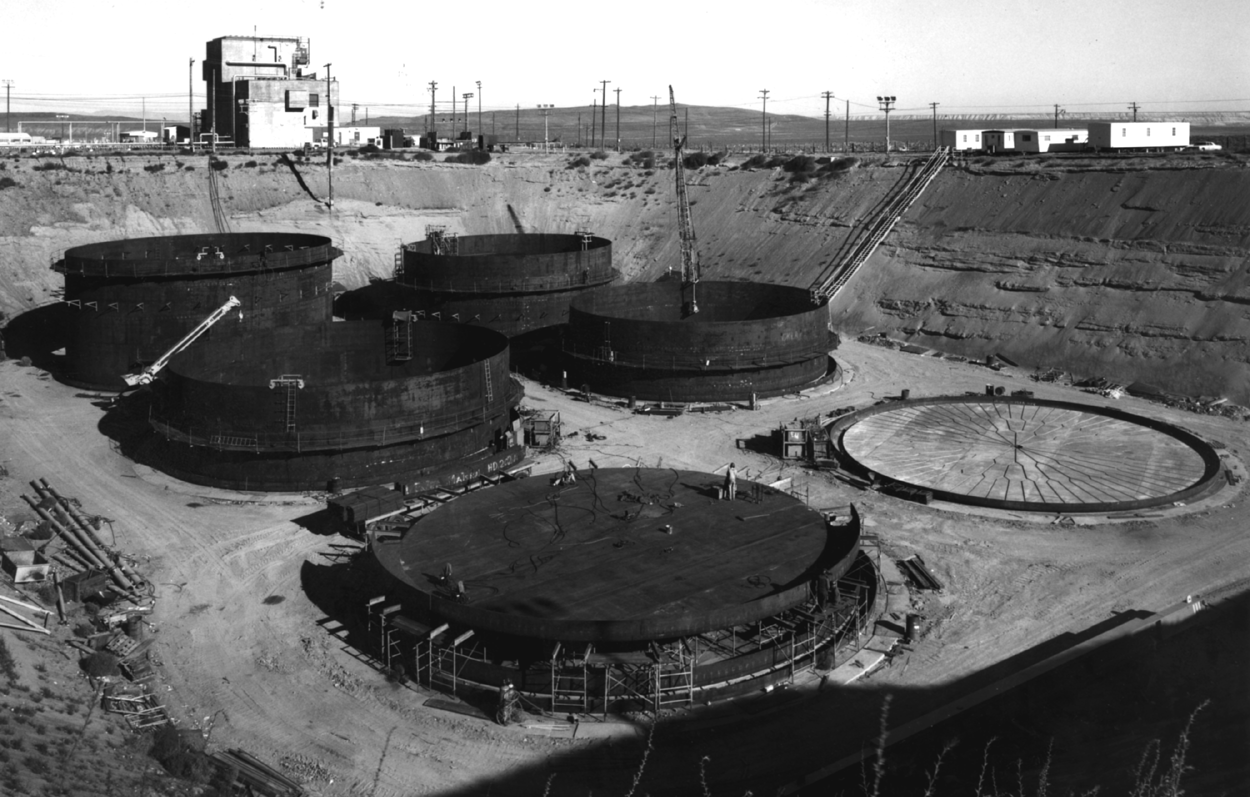
That didn’t happen without damage. While Hanford was operational, more than 400 billion gallons of contaminated liquid seeped into the ground water and the Columbia River. In 1988, a year after it shut down, the 580-square-mile site was declared a Superfund site. More than 2,000 facilities needed to be remediated, and 56 million gallons of high-level waste buried in 177 huge metal tanks had to somehow be disposed of.
Decades later, the federal government still hasn’t created a permanent disposal solution, and interim management plans have been constrained and delayed by technological hurdles, budget cuts, and policy changes. What was supposed to be a 30-year clean-up project is now projected to stretch into the 2070s. Meanwhile, the tanks are breaking down; 67 are assumed to have leaked and three are currently leaking.
In the rush to develop weapons, these radioactive hazards were created before there was ever a plan to manage them long-term. While Hanford is finally beginning to corral the worst of the weapons waste, dealing with the impacts of this “figure it out later” mentality has proved far harder than expected, even with the best intentions and most cutting-edge science.
Nuclear waste is broadly divided into two categories. Low-level waste, like wastewater or tools contaminated by nuclear reactions, might be radioactive but minimally so, and the radioactivity decays comparatively quickly. High-level waste, in contrast, is the highly and enduringly radioactive byproduct of nuclear reaction, mainly in the form of spent fuel and leftover processing material. Globally, high-level waste comprises about 3 percent of total nuclear waste volume, and 95 percent of total radioactivity.
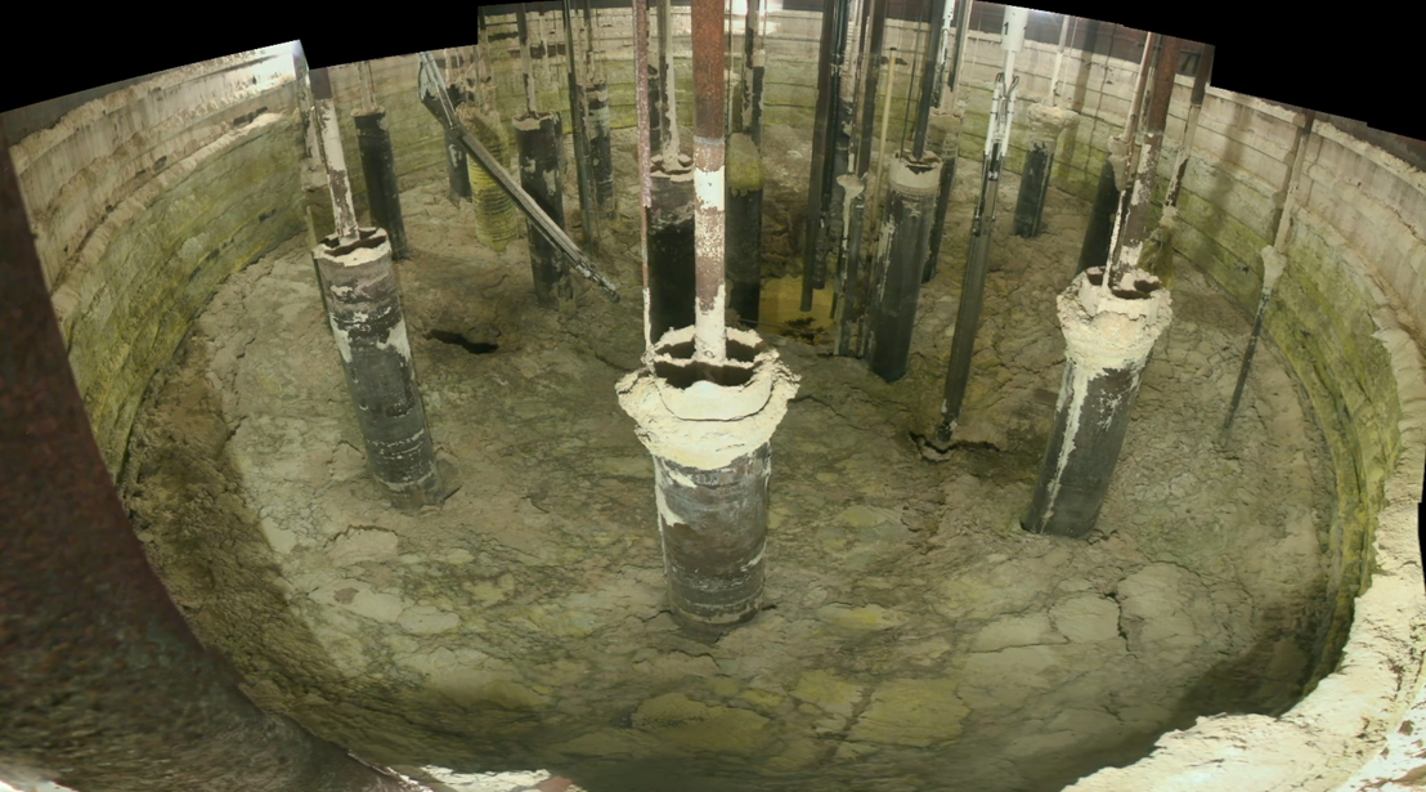
That’s what sits underground at the center of the Hanford Site in what are known as tank farms. The tanks range in capacity from 55,000 to 1 million gallons and contain mixtures of liquid, salt, and sludge that are radioactive, chemically hazardous, and corrosive. If you were to pull a shot glass of material out of one of the tanks, it would kill everyone within 100 yards instantly. And the danger is not going away. Plutonium, one of the components of that poisonous soup, has a half-life of 24,100 years, meaning that it takes, on average, 24,100 years for half the plutonium in any given sample to radioactively decay into harmlessness. In short, it’s dangerous, long lasting, and there still isn’t a long-term plan for it.
For 40 years, workers pumped Hanford’s waste into the tanks, waiting for the federal government and the states to agree on how to permanently deal with high-level waste from both the weapons program and nuclear power generation. Then, in 1979, an accident at Three Mile Island set off a rush of anti-nuclear activity and a renewed push for waste management. In 1982, Congress passed the Nuclear Waste Policy Act, which authorized the Department of Energy to find a stable place to permanently store nuclear waste underground. In 1987, Congress amended the act and declared Yucca Mountain, Nevada, the only viable option, but the project has been stalled since 2010 because of political opposition.
Because of that, facilities that generate high-level waste have had to come up with stable solutions for indefinite interim waste storage.
Spent fuel from commercial power generation is kept onsite at current and former nuclear reactors. It’s regulated by the US Nuclear Regulatory Commission (NRC), which permits two kinds of long-term, temporary storage. The first is spent fuel pools, where fuel rods fresh out of the reactor are submerged roughly 40 feet underwater in steel-lined, concrete pools to cool for 1-10 years. When the pools started filling up and there was still no permanent repository, the NRC developed dry cask storage, where cooled spent fuel is sealed within a metal cylinder, with more metal and concrete used as shielding to contain the radiation. As of December 2024, there were more than 315,000 bundles of spent nuclear fuel rods in pools, and more than 3,800 dry storage casks across 39 states. The NRC says the casks are designed to withstand natural disasters and aging, are inspected regularly, and have “released no radiation that affected the public or contaminated the environment.” Still, they are considered temporary and are only licensed for 40 years at a time, subject to renewal.
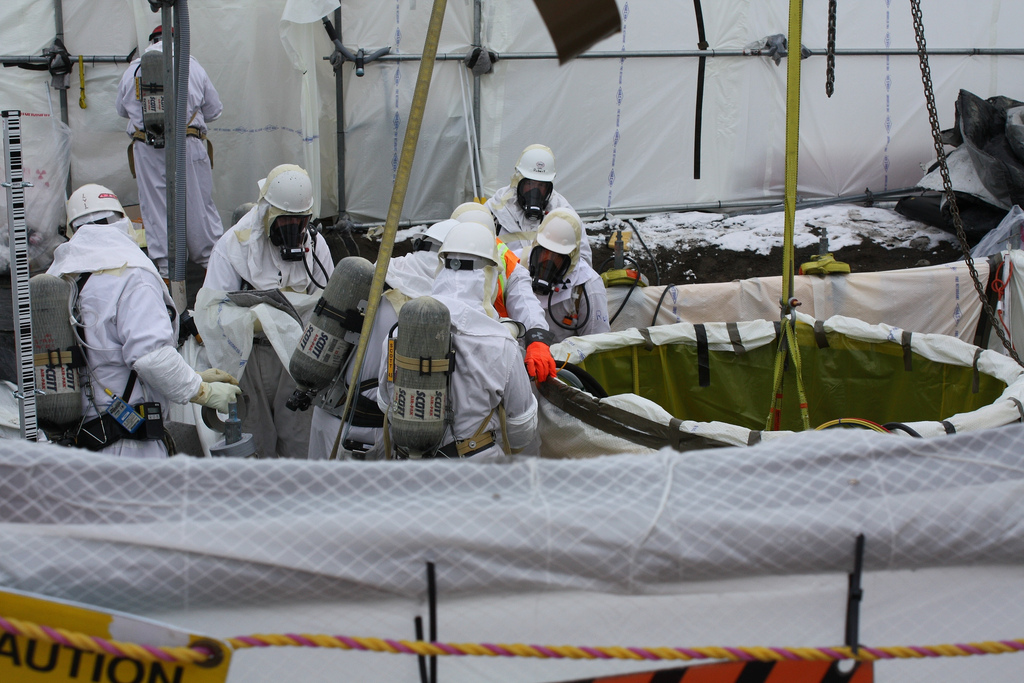
On the weapons side, the US Department of Energy (DOE) is responsible for the high- and low-level waste from the country’s nuclear defense program, which is mainly stored at three locations: Hanford, the Savannah River Site in South Carolina, and Idaho National Laboratory. There are about 10,000 metric tons of high-level defense waste between the sites, in different and more forms than just spent fuel rods. “Hanford’s tanks contain the most complex heterogeneous radioactive waste at any US clean-up site,” reports the DOE, which is part of why it’s taken so long to figure out how to deal with it, even though general site cleanup started in the late ’80s.
In 1989, just after Hanford shut down and was declared a Superfund site, the Washington State Department of Ecology, the DOE, and the US Environmental Protection Agency (EPA) signed the Tri-Party Agreement, outlining a plan for coordination around site clean-up. Under the agreement, the DOE manages the site and performs the cleanup, while the EPA and the state are regulators. “Energy is doing the work of the actual cleanup,” says Ryan Miller, communications manager for the Department of Ecology’s Nuclear Waste Program. “We oversee it, approve plans and deadlines, and assure they’re following plans.”
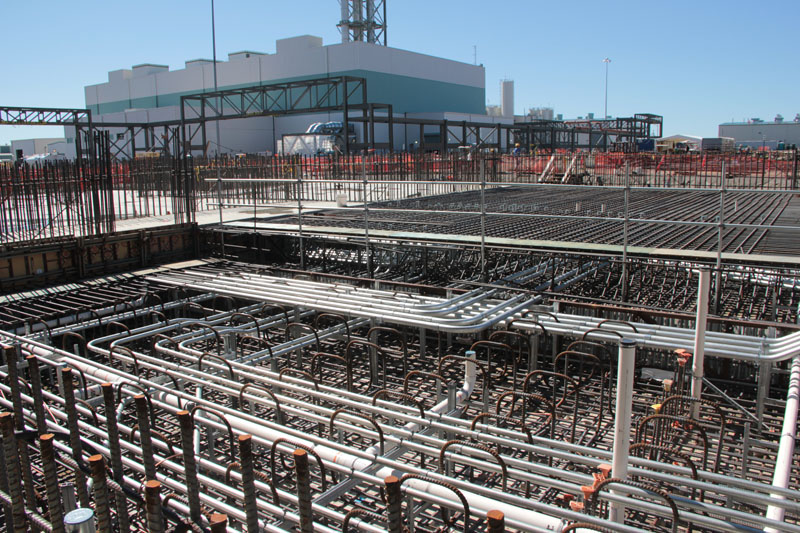
Miller says that cleanup across Hanford’s vast area has included everything from addressing groundwater contamination to encasing former reactors. “Tank waste is the biggest mission, but it’s just one piece of the puzzle,” he says.
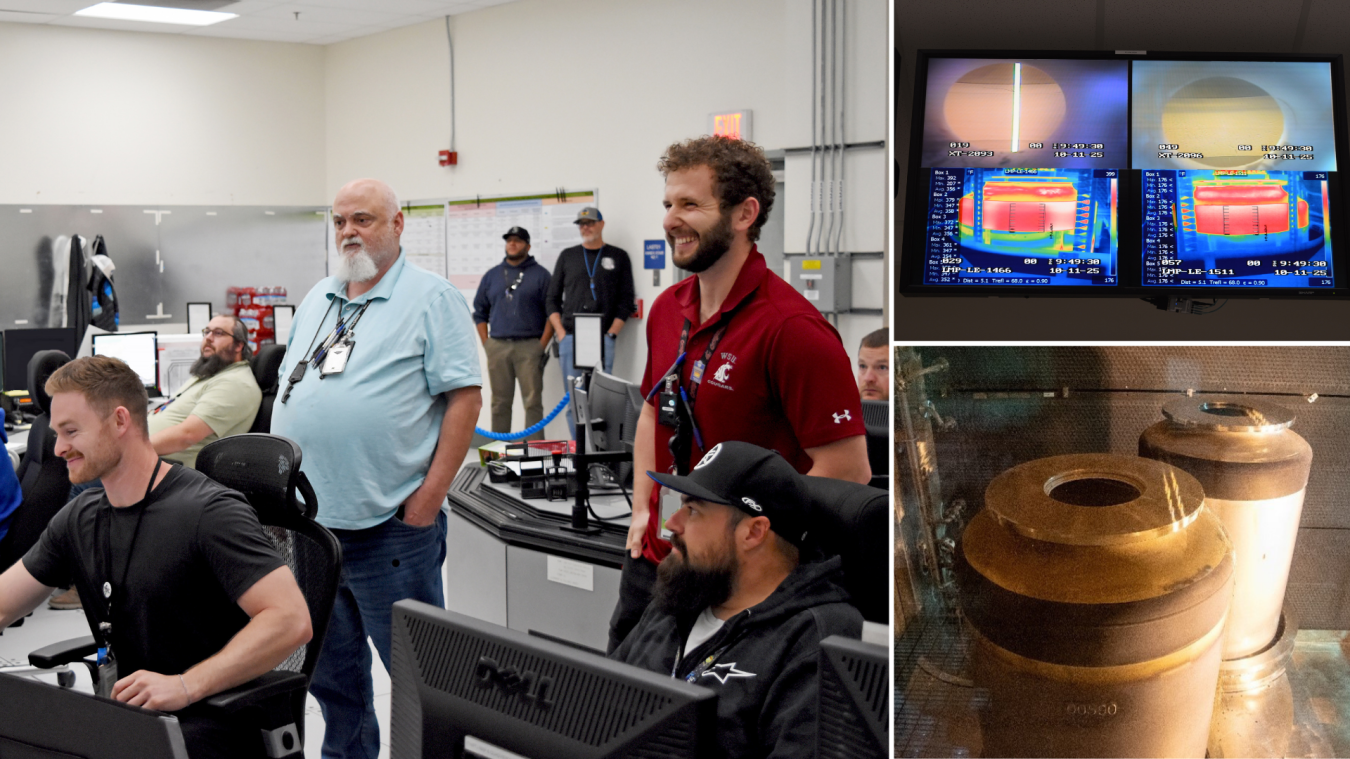
It has proved to be a complicated piece. Because the tanks were unstable and leaking, one of the stipulations of the Tri-Party Agreement was that the tank waste would be vitrified into glass. Vitrification involves mixing the waste with materials like silica and boron oxide, heating it up to approximately 1000 Celsius, and letting it cool and solidify in metal containers. Because the glass is solid and chemically stable, it won’t corrode the containers, then leak or leech into the environment the way that the tank waste can. The glass is still radioactive, so metal and concrete barriers are used as shielding just like with dry cask storage.
Vitrification has been considered a viable process for controlling nuclear waste since French scientists started experimenting with it in the 1950s. But actually doing it at the Hanford Site has proved difficult, expensive, and full of hurdles. According to reporting from Science, “Initially, the vitrification plant was supposed to cost $4.3 billion and open by 2007. Today, more than $10 billion has been spent on the plant alone, and the entire cleanup is estimated to cost $200 billion to $350 billion and stretch into the 2070s.”
The reasons for this are both technical and policy related. Miller says that in the early 1990s, the plan was to pursue vitrification at Hanford and Savannah River at the same time and get both plants running that decade. Due to funding constraints, the federal government decided to proceed with Savannah River and pause Hanford, in part because the waste at Savannah River was seen as easier to deal with. According to the DOE, Hanford has nearly twice the volume of radioactive waste, a much wider variety of chemical mixtures, and almost four times as many underground tanks to manage. Savannah River was a way to start learning about the vitrification process; Hanford was where the process would really be proven.
At Hanford, “Each tank is kind of a snowflake,” Miller says. “Each has different levels of certain chemicals.” The initial plan was to pull all of the waste out of the tanks and consolidate it in a pre-treatment facility, where workers could separate out and treat the low-level waste first, and then get to the high-level waste. Construction even started on a pre-treatment facility, but was suspended in 2012 before the facility was ever used because the team contracted by the DOE couldn’t figure out how to safely get the waste from the tank to the facility. Eventually, they came up with a method they call tank-side pre-treatment, where they separate the high- and low-level waste in each individual tank at the tank itself, then siphon off the low-level waste for vitrification. It took decades to get there.
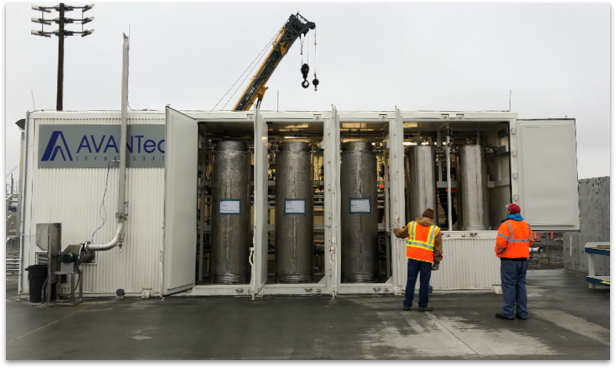
Throughout that time, federal budgets changed and shrank, which meant that it was hard to consistently plan for the future or work at full capacity. Miller says they almost never have enough money to do the work they’re supposed to be doing. “We haven’t had a compliant budget for decades,” he says. “Last year Congress appropriated a record-high budget for Hanford of $3.35 billion. It’s a record number, but it’s only half of what’s needed. In the new fiscal year, they cut it by $400 million,” funneling the appropriation into military spending instead. “It’s super concerning.”
Because of these holdups—which also included a whistleblower incident about overinflated hours that stopped work for a while—workers didn’t pour the first yard of concrete for the Waste Treatment Plant until June 2002. It took another two decades before, in October of 2025, the 3000 vitrification plant workers at Hanford started turning the first of the low-level waste into glass.
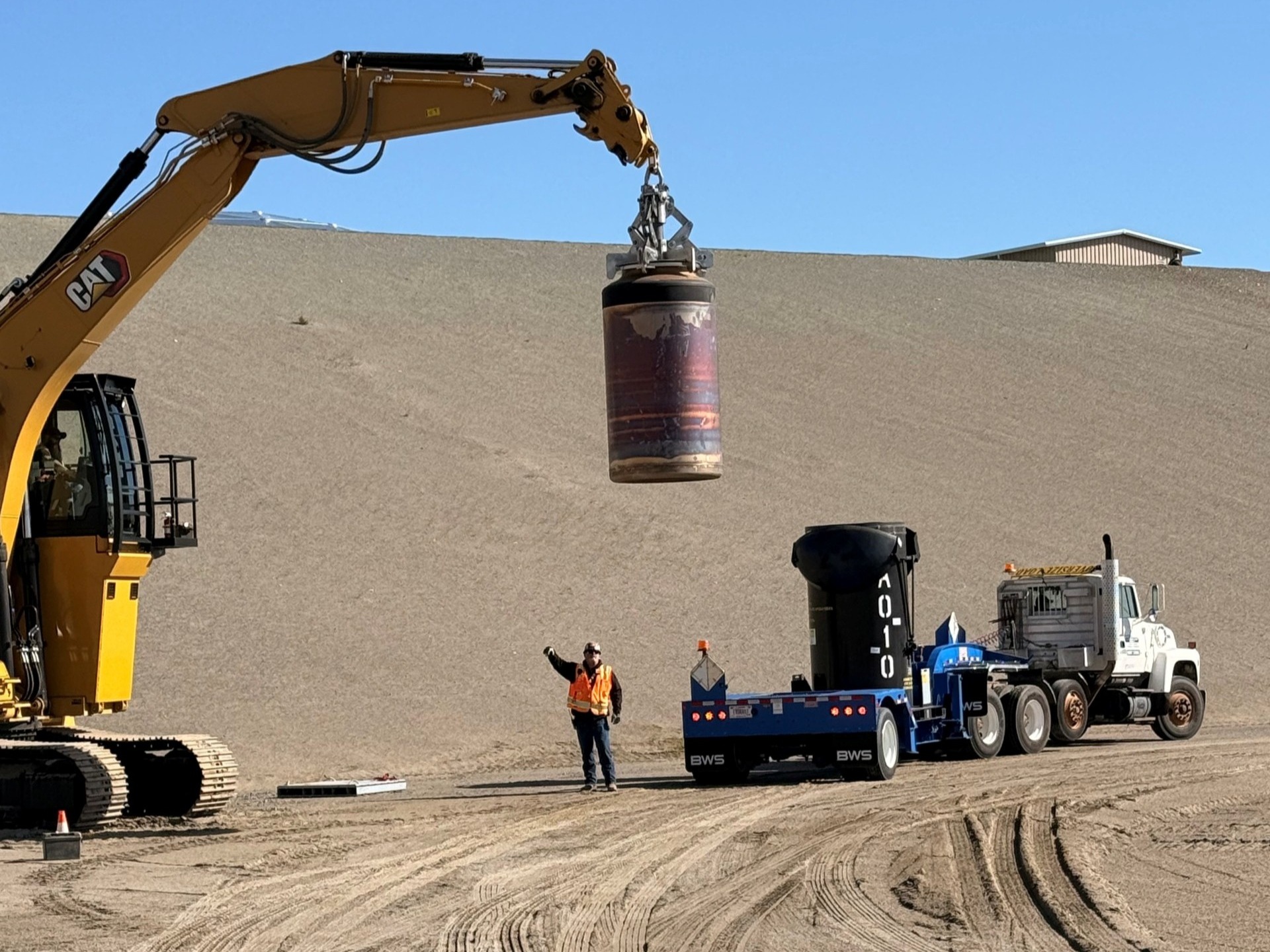
Miller says that as of May 19, 2026, 1.2 million gallons of waste have been processed with the tank-side pre-treatment method and 105,257 gallons of pre-treated low-level waste have been vitrified. It will take three years to ramp up to full capacity, but the DOE projects that they’ll be making 30 metric tons of glass a day by then. Once it’s vitrified, the low-level waste stays on site at the Integrated Disposal Facility—essentially a heavily engineered landfill in the middle of the Hanford land mass—where it can be stored forever.
The DOE is also working on getting the non-liquid high-level waste out of the tanks—another one of the techniques they’ve had to learn and perfect. They’re slated to finally start vitrifying that high-level waste in the early 2030s. From there, the process is expected to ramp up and continue for approximately the next 40 years.
Miller says they consider vitrified high-level waste a good, safe stopgap for an indeterminate amount of time, but it will eventually need to go to wherever a permanent federal repository might be. After decades of solving one tank waste puzzle after another, through fluctuating budgets and changing policy priorities, Hanford’s work toward vitrification has answered some of the questions deferred by the government when it started producing nuclear waste eighty years ago, but not all of them. “With all this talk about new nuclear,” Miller says, “we’re still having conversations about where to permanently dispose of waste.”
Heather Hansman is a freelance journalist based in Southwest Colorado. She’s the author of Fierce Country, Downriver and Powder Days. You can find out more at heatherhansman.com.
Header image: The B Reactor at the Hanford Site, where uranium was bombarded with neutrons to produce plutonium, which does not occur in large quantities in nature. The plutonium was isolated elsewhere at the Hanford Site before being shipped to Los Alamos to be turned into a nuclear weapon. (US Department of Energy)