Tribal members contend with Cold War legacy on Wind River Reservation
By Christine Peterson
America’s Cold War legacy weaves through Rae Friday’s childhood as a series of dark, sad, and often surreal memories. There’s the two-headed water snake she and her brothers found in a pond where they played near their home on the Wind River Reservation. There’s the two-headed calf found in a field across the street where 1 million cubic yards of uranium tailings leached radioactive waste into the ground water. Then there were the trucks hauling the tailings away, yellow powder billowing into the air and onto houses, cars, and roads.
As years passed, the legacy seeped into the land, killing the leaves her father, a member of the Northern Arapaho Tribe, brewed for tea and the berries he gathered for medicine. The water flowing into her family’s bathtubs ran red and stained their clothes. They tried to make someone, anyone, listen as they talked about foul-tasting drinking water and wells that tested positive for high levels of uranium and molybdenum.
Then her neighbors fell sick, one after another diagnosed with an unusual variety of cancers. As Rae sits on her couch, in her home a stone’s throw from where she, her father, her grandfather, and her grandfather’s father grew up, she lists their names. Some are still alive. Many have already died.
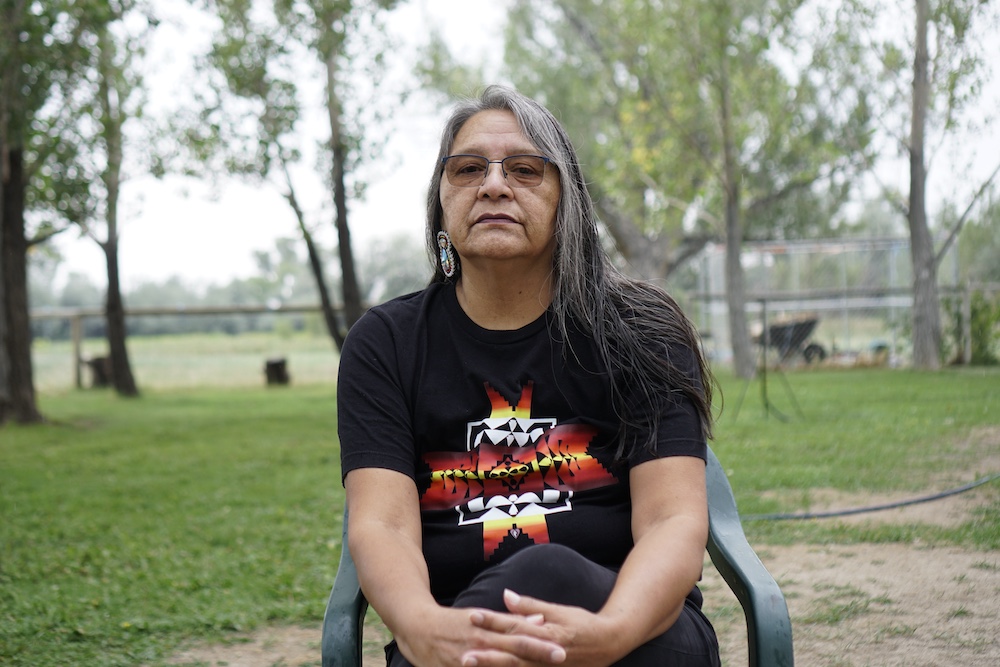
Five years ago, the nation’s Cold War legacy came for her. Tests revealed two different kinds of breast cancer, one in each breast, at stage two and stage three. She’s sure the cancer stemmed from the uranium milled across the street from her childhood home. “They put us on the worst land they could find, and then they brought us this,” she says. “But I’m a survivor. My people are survivors.”
These are the lessons she’s carrying with her as talk circulates about uranium recovery ramping up, this time with different technologies and new assurances it won’t go wrong. That was then, the experts say. It will be different now. But Rae isn’t so sure. Companies likely have the technology to do it right, says Rae’s husband, Nolan Friday. They can probably mine uranium and process yellowcake in a way that doesn’t poison a community. But the couple worries the country is on the cusp of another nuclear race—this time not for bombs but for energy. Their family’s history, they say, is living proof of the fallout of a toxic industry in a hurry.
Boom and bust
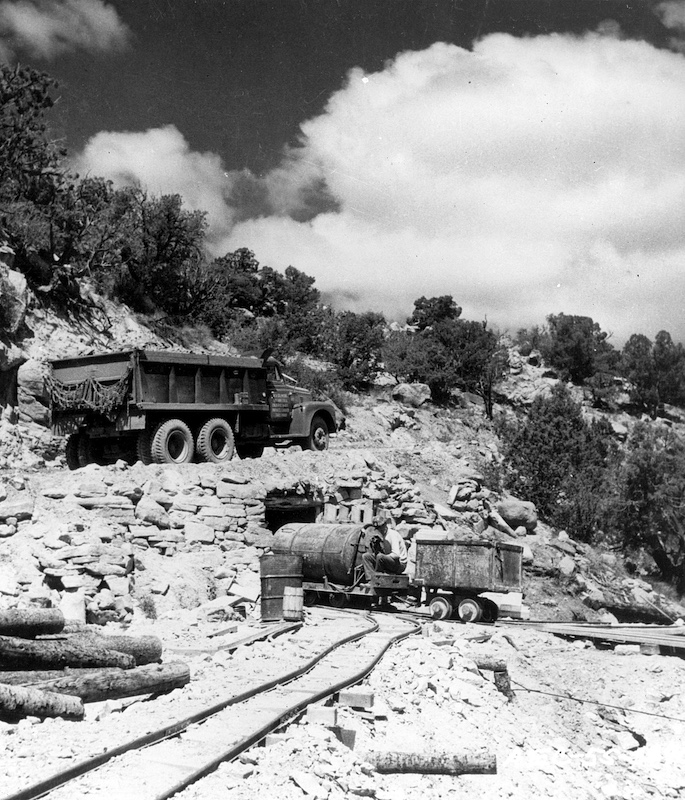
The mad dash to stockpile uranium at the start of the Cold War arrived in Wyoming’s Gas Hills in 1953, when a part-time prospector from Riverton and his wife discovered a thick yellow deposit in a cliff while antelope hunting, wrote Winifred Galloway in a 1961 University of Wyoming master’s thesis on uranium mining. The federal government needed uranium to build the nuclear bombs meant to deter nuclear war, and it needed it fast. The newly formed Atomic Energy Commission was offering minimum prices for uranium ore and bonuses for new discoveries.
So, the prospector staked a claim on the open, barren site 75 miles northwest of Rawlins and 35 miles south of Moneta in central Wyoming. Other prospectors and geologists followed, creating 7,000 claims across Fremont County in just two years. Mines went up and digging began, opening gashes across the region in a frenzied race to supply the country with fuel to fight the enemy. Mills, which process uranium ore into concentrated uranium called yellowcake, popped up just as quickly.
As the Susquehanna-Western Company cast around, looking for someplace to build its mill, “they decided the best place for the operation was the Wind River Reservation,” says Big Wind Carpenter, a Northern Arapaho tribal member who works as the tribal engagement coordinator for the Wyoming Outdoor Council, and whose family lived and continues to live near the Fridays. The details of how, exactly, Susquehanna-Western ended up building its milling facility on Friday’s family’s land are left to stories. But the way Soldier Wolf, Rae Friday’s father, told it, men in suits drove from Riverton to his grandparents’ house and handed the elderly Northern Arapaho couple some papers.
“They said we had 30 days to move out of here,” Rae says, recalling her father’s words. Soldier Wolf’s grandfather said the land was his, given to the Northern Arapaho after they were forced to share the reservation with the Eastern Shoshone. “‘This is where our family is going to be. Why do we have to move?’” she says he asked.
The men told Soldier Wolf’s family that the uranium mill would go there, and the land would be taken through eminent domain. If the family didn’t move, they would be arrested. So, Soldier Wolf’s grandparents gathered their belongings, cows, and horses, and moved across the road.
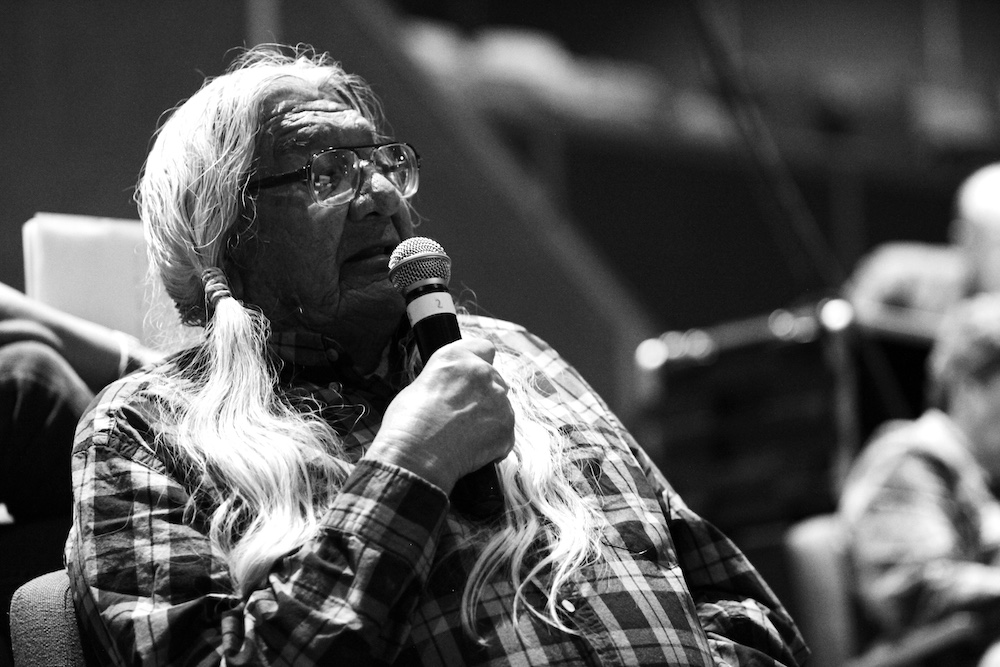
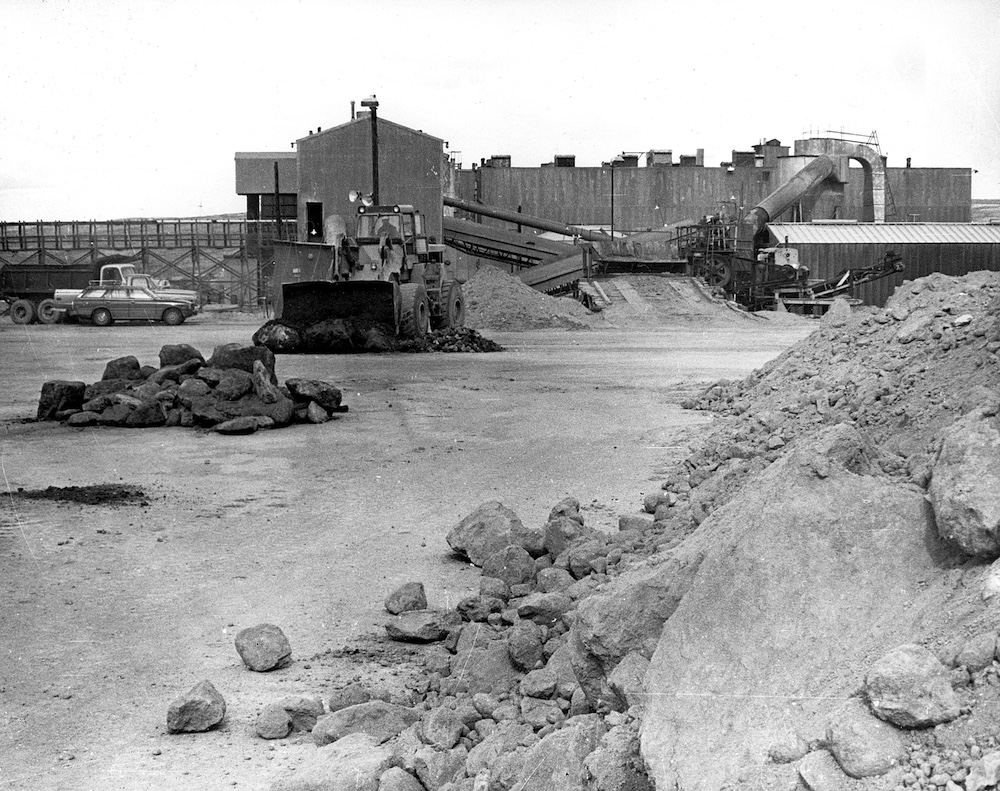
The mill went up fast, opening in 1958. Soldier Wolf and other tribal members worked there for a time. Conditions were rough, according to a 1980 story in High Country News. “Men who worked at various mills tell of stirring yellowcake with rakes in open, steam-heated floor pans,” wrote Marjane Ambler. “They were given cloth respirators to cover their noses and mouths, but sometimes they weren’t cleaned, and men would use them still caked with residue from the previous day. Since they often weren’t told that uranium could be dangerous, some men wouldn’t bother to wear the respirators at all.”
Many of Soldier Wolf’s friends who worked at the mine died as a result of their exposure, he told Kit Freedman, who wrote his University of Wyoming master’s thesis on the impacts of the legacy uranium waste on the reservation.
Then, almost as quickly as it went up, the mill closed in 1962. Mills across the state and country had ramped up production, and the mill on the Wind River Reservation was no longer economically viable.
Susquehanna-Western left behind 1 million cubic yards of tailings piled on about 70 acres, enough to fill most of a football stadium. No lining protected the groundwater underneath the tailings, as years of rain and snow leached through. No tarp or covering on the top prevented radioactive dust from blowing around and coating vehicles and roads. Tribal members and even residents in nearby Riverton started raising alarms about yellow dust billowing into town, water running red, and people falling sick.
“When the winds came up, you could see the dust coming into town,” Nolan says. “If you went to Dairy Queen and got a cone you would be lucky if the dust didn’t fall on it and then you would eat it.”
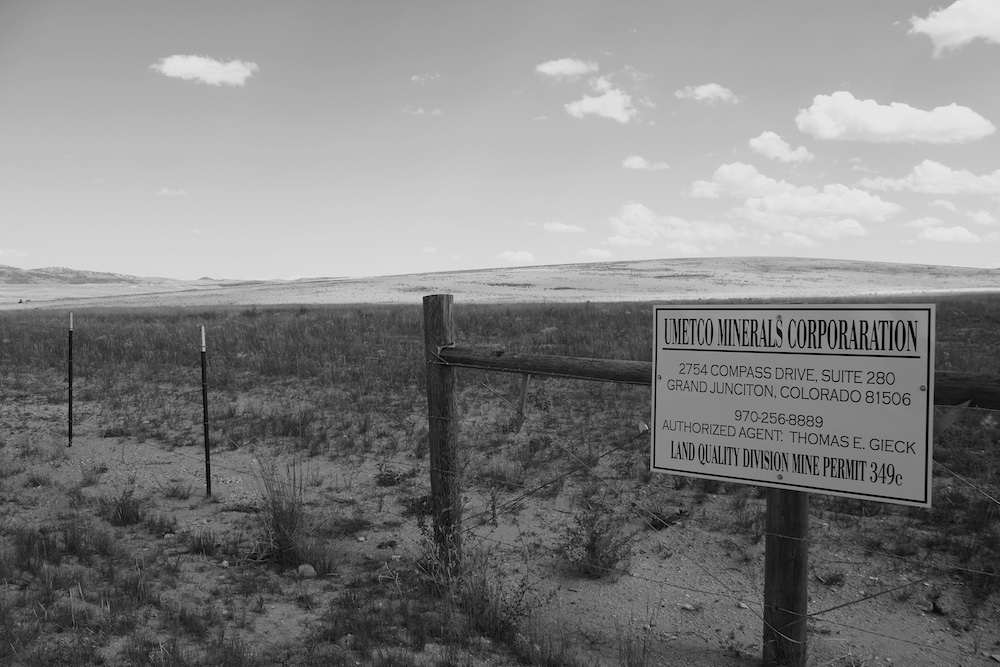
The pleas for help reached Wyoming Representative Teno Roncalio, who wrote a letter in 1973 to the head of the Atomic Energy Commission asking for help cleaning up the tailings. “The pile has been a source of considerable irritation and consternation to the residents of the Riverton community,” he wrote. “There is a continual threat of radiation drifting from the pile.” Five years later, Congress passed the Uranium Mill Tailings Radiation Control Act, which authorized the Department of Energy to clean up the former Susquehanna-Western mill (also known as the Riverton Processing Site), along with many other Cold War legacy sites.
It took more than a decade for the DOE to begin hauling the tailings back to Gas Hills and away from towns and water supplies. Many of the trucks driving the road in front of Rae’s family home traveled with no tarp or covering on the top. Even more yellow dust flew through the air, she says. Finally, in November 1989, the Department of Energy declared surface remediation of the site finished—nearly 30 years after the mill had closed.
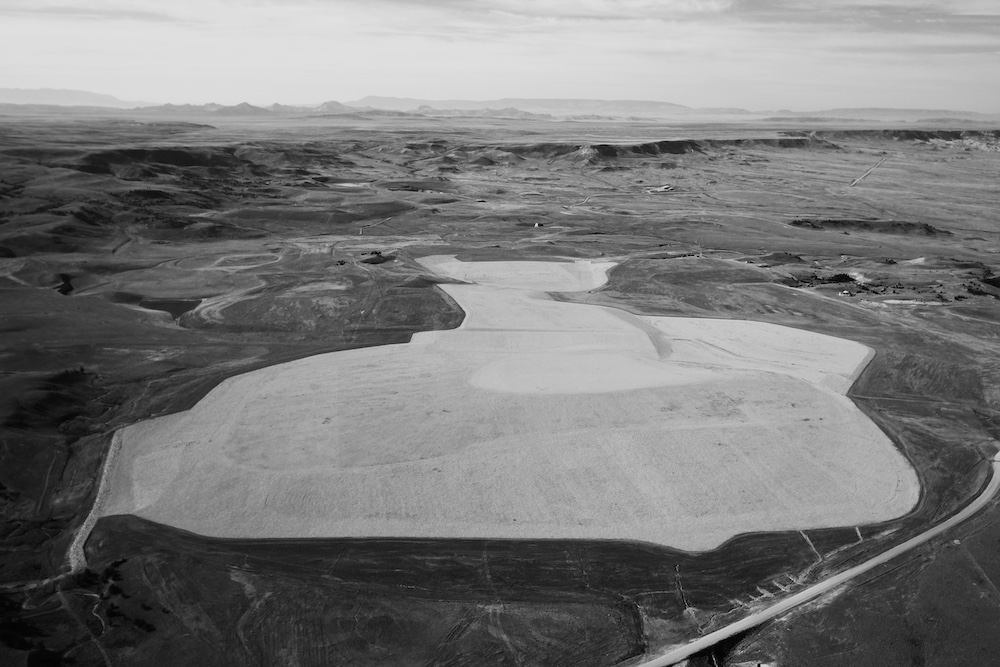
And yet, a Department of Energy risk assessment in 1995 identified 24 contaminants in the water. Many of them, including arsenic, lead-210, uranium, thorium-230, and vanadium, exceeded background levels. A 2023 U.S. Geological Survey (USGS) report also states that “groundwater below and downgradient from the tailings site and nearby Little Wind River was not remediated.” The Department of Energy concluded anyway that “currently no health risks are associated with site ground water.”
Still, the federal government placed some institutional controls on the area, which are intended to minimize exposure to contaminants. They placed signs near ponds warning people not to play in the contaminated water. They instituted a moratorium on drilling new wells and capped existing water wells, like the Fridays’. They also would pay for pipes to supply houses in the area with clean water, but it took decades for the water line to come to the Fridays’ house, and now tribal members must pay for that water even though many can’t afford it. Then the Environmental Protection Agency created a “100-year plan” to ensure the area would be fully remediated within a century.
A decades-long paper trail shows endless back and forth between the tribes, the federal government, and Wyoming’s Department of Environmental Quality, as the tribes tried to force the Environmental Protection Agency to increase monitoring and clean up.
But the signs warning people not to play in the creeks have long since fallen over. A radioactive plume is expanding through the groundwater, says Carpenter, and even entering the Little Wind River, according to the USGS report. And people like Rae continue to become sick.
“We are trying to learn from those mistakes”
That was then, industry representatives and regulators say. It’s different now.
Uranium companies in states like Wyoming no longer gouge out the tops of mountains to unearth massive quantities of ore. They don’t create scars on landscapes visible from satellite. “This is, historically, what a uranium mine looks like,” said Ur-Energy’s CEO Matthew Gili at an April presentation to a room full of industry insiders, scientists, and skeptics at the University of Wyoming. The picture showed an industrial wasteland. “This is Jeffrey City in the 1970s. This is dramatic mining. It’s called high impact mining. It’s what we did at the time. . . . That’s our legacy.”
Ur-Energy is the only publicly traded uranium company headquartered in Wyoming. Gili said the next slides showed what uranium mining looks like today: fields of prairie grasses dotted with what resembles brown buckets, and a nearby building housing a water softener.
Today’s most common uranium mining is in situ, which is Latin for “in the place.” In practice, in situ recovery is when a company like Ur-Energy pulls water from a local aquifer, fortifies it with oxygen and baking soda, and then pumps it back underground into uranium deposits. The oxygen and baking soda solution dissolves the uranium, which is pumped back out of the ground into water softener tanks where the uranium is extracted. The process then begins again until all uranium has been removed. And because the entire process is completed on site, companies no longer need a separate, offsite mill that leaves behind tailings.
Companies must drill wells, but once they’re established, the footprint is minimal, especially compared to the strip mines of half a century ago. It’s also much cheaper than previous mines, according to Ur-Energy. The company has two operations in Wyoming, one in Lost Creek, north of Rawlins in the Great Divide Basin, and one in Shirley Basin. Other companies have in situ projects in the Powder River Basin and in the remnants of the Gas Hills area.
Not only has the technology improved significantly since the ‘50s, so has the oversight by both state and federal regulators. Like Gili, Brandi O’Brien, Wyoming’s Land Quality Division administrator, acknowledges the Cold War legacy’s mess, and the damage done when few recognized or even understood the potential long-term impacts. Historic mines often came with inadequate environmental standards, she says, inadequate groundwater monitoring, and tailing locations that could cause human and environmental harm. The state carried insufficient bonds on companies that went bankrupt, leaving taxpayers footing the bill.
“We are trying to learn from those mistakes,” she said at the same University of Wyoming conference.
Now, state regulators have one protocol after another to keep people safe. “We really focus on groundwater protection, obviously, because in situ recovery involves dissolving uranium underground in an existing aquifer,” she said. Before uranium operators are allowed to tap into an aquifer to remove water, and eventually inject it back, they must prove the water in the aquifer as it exists is unusable and undrinkable. And once it’s certified as undrinkable, it can never be tapped for human use.
From there, mine safety regulators have a “plethora of reporting requirements” for each mine, she said. Companies must use a double synthetic liner for their wastewater evaporation pits to prevent water from seeping. Regulators also require leak detection systems and monitoring wells so if an evaporation pond does leak, “they can correct it in a timely manner,” she said. Tailings can be deposited only in controlled areas with significant bonding in case of a bankruptcy.
“We look at surface water protection, topsoil protection, revegetation requirements. Not a lot of things grow here in Wyoming, so we take the protection of our topsoil very seriously, so that when sites are finished, they have the fertile soils where they can replant to get things going again.”
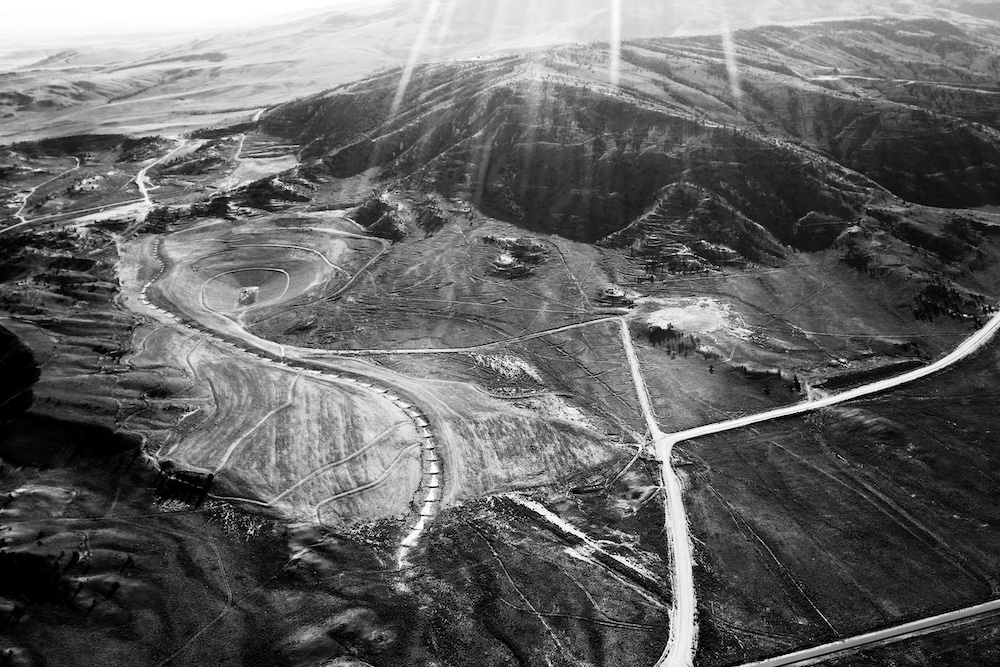
All these regulations apply to new mining. Some evaporation pits, like those leftover from the Smith Ranch-Highland uranium recovery operation run by Canadian company Cameco Resources from 1975-2018, are only lined with clay and have incurred citations for leaks in the past, among other environmental violations. Those ponds are old, O’Brien said, and fall under different regulatory requirements that reflect the permitting and licensing of the time. “We are aware of things like unlined ponds leaking,” she said. “And it is something we have learned from.”
Travis McLing, Idaho National Laboratory’s chief geologist and directorate fellow, agrees. He started his career in uranium decades ago, “immobilizing and cleaning up so it doesn’t represent a hazard.” Now he works for Idaho National Laboratory helping companies develop ways to mine and process uranium safely.
His biggest concern is that companies aren’t all adopting state of the art technology as quickly as he would like to see, including artificial intelligence that can help with remediation. He also wants the public to be involved in the process. To ask questions, to show up to meetings. People need to pay attention to mining in and near their communities, he says. Bottom line, companies can do their best, but safety isn’t a guarantee. “Failures happen from time to time. They are rare. What we do is we use the best practices to minimize that probability.”
“Never again”
Despite assurances by people in suits explaining why it’s safe, Rae can’t shake the feeling that the industry now is no different in terms of environmental contamination than it was when her father was young. She hears explanations about how mining was done in hurry in the ‘50s. We were at war. We needed material to make bombs. But then she and fellow tribal members hear the same urgency now.
President Trump’s “Unleashing American Energy” executive order sets energy independence as a national priority, but Gili says the US only produces around 2 of the 50 million pounds of yellowcake it uses each year. “We are relying on the rest of the world for 96% of the uranium that we need for our nuclear energy industry,” Gili said at the end of his presentation. “We are relying primarily on Kazakhstan and Uzbekistan to get that. They’re great countries, wonderful producers, wonderful allies—but there is a strategic risk.”
At the same time the Trump Administration is pushing nuclear development, it’s also shortening approval times, curtailing public comment, and in some cases lessening environmental review through changes to rules implementing the National Environmental Protection Act. It also dramatically changed the historical independence of the Nuclear Regulatory Commission, the regulator that oversees the safety of commercial nuclear power plants. These federal rollbacks exacerbate an atmosphere of change and mistrust.
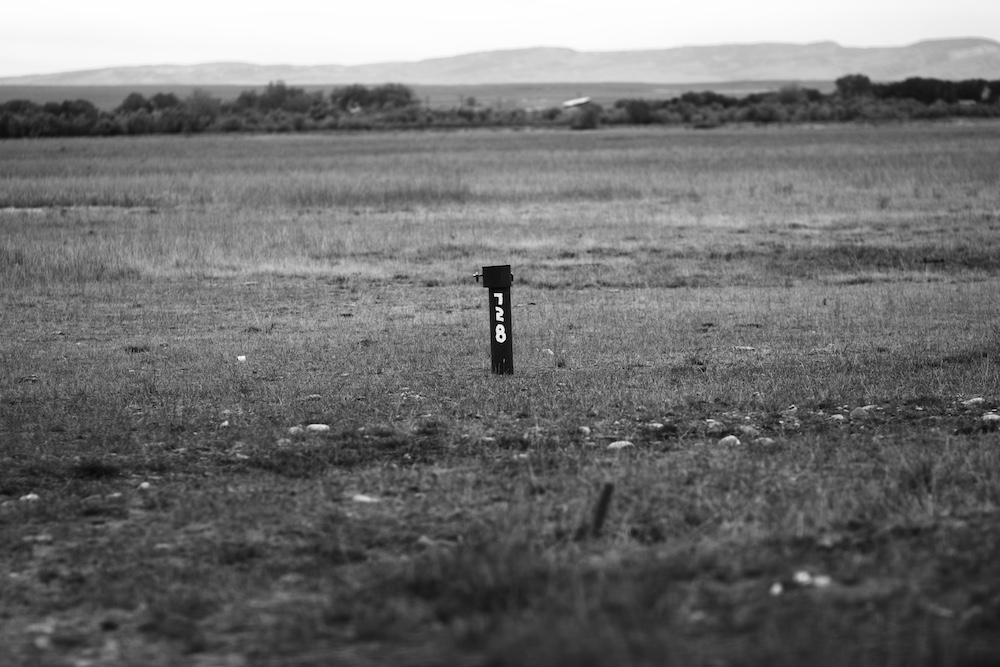
“The issue is that this industry used to be one of the most heavily regulated, if not the most heavily regulated industry, because of its potential dangers to the environment and human health,” Carpenter says as they drive past the 70 acres on the Wind River Reservation where the uranium tailings once sat. “And now we’re not only seeing a deregulation, but we’re also seeing this idea that companies can self-regulate, and that’s dangerous, especially with something that if it goes wrong, has lasting impacts for 1,000 years, long after we will no longer be here.”
And tribes across the West still feel steamrolled. The Havasupai Tribe and Navajo Nation—which have suffered from a history of uranium mining and contamination—are still fighting recent decisions to transport uranium ore through their reservations in northern Arizona. The Ute Mountain Ute Tribe and others are still dealing with contamination from a uranium mill near White Mesa, Utah, that has plans to expand. And the Oglala Sioux Tribe continues to push back against a Trump administration plan to green light and fast track an in situ operation on the border of their reservation using a new process allowing quick approval of new mines.
The Eastern Shoshone and Northern Arapaho Tribes have taken it upon themselves to prevent any new nuclear development, including mining and milling. In early 2026, the Eastern Shoshone General Council and the Northern Arapaho Business Council each voted on and passed a resolution to prohibit the transportation, storage, or disposal of nuclear or uranium materials within the Wind River Reservation.
Carpenter would like companies, the state, and the federal government to come to communities changed by uranium mining and talk to them, learn from them. They won’t change if they don’t understand what went wrong in the past, Carpenter says. It’s also why Rae keeps showing up to public meetings, seminars, anywhere people might listen.
She remembers talking with a fellow tribal member at a health clinic one day while both waited for treatments associated with their cancers. The older woman told Rae to do something, anything. “She said, ‘You’re young, you should go and start telling the leaders what’s going on,’” Rae said. “So, I started looking at how we could protest this and bring attention to the area.”
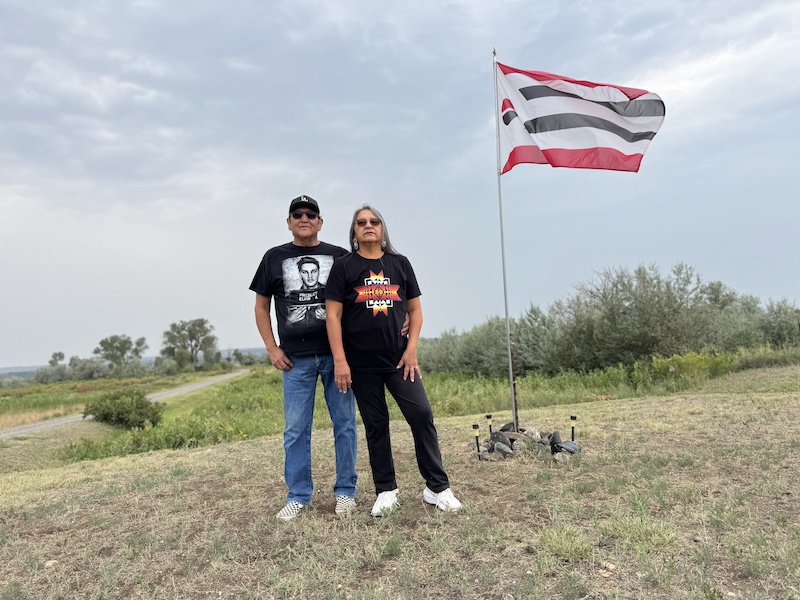
As Rae and Nolan cup their hands around warm mugs filled with tea made from water they bought at Walmart for fear of drinking the water from their taps, she says, simply, “Never again.” No one can offer enough assurances that the type of catastrophe and negligence that happened on her family’s land won’t happen another time. To them, the answer is simply no. They hope any other community considering opening their doors to uranium mining understands the risks, and any company or government official understands that tribal members, in particular, have deep attachments to the land. If their soil becomes polluted, they can’t just find somewhere else to live. The legacy is with them, their children, their grandchildren, and their great-grandchildren, with the plants, the snakes, the calves, and the fish.
“We are Arapaho. This land was given to us to steward. We have to take care of it,” Rae says. “We can’t just pick up and leave.”
Carpenter nods their head as they sit across from Rae at her kitchen table, adding: “We will be here forever.”
Christine Peterson is a Laramie-based journalist who has written about outdoor and environmental issues for more than 15 years for High Country News, Outdoor Life, Wyofile and many other publications.
Kit Freedman is a fifth-generation Wyomingite who was born and raised in Lander and now lives in Laramie. The photographs accompanying this story were included in his 2012 master’s thesis project, Contamination at Wind River: Perception, Science, and the Riverton UMTRA Site.
Header image: In its 1998 “Project Site Observational Work Plan,” the Department of Energy proposed to reduce contaminant concentrations to below regulatory limits by letting natural ground water movement slowly flush the contaminants over the next 100 years. In the meantime, “institutional controls” like this warning sign were meant to reduce the risk of human exposure to the contaminated groundwater. (Kit Freedman)