Development and testing needed for domestic supply chain
By Kristen Pope
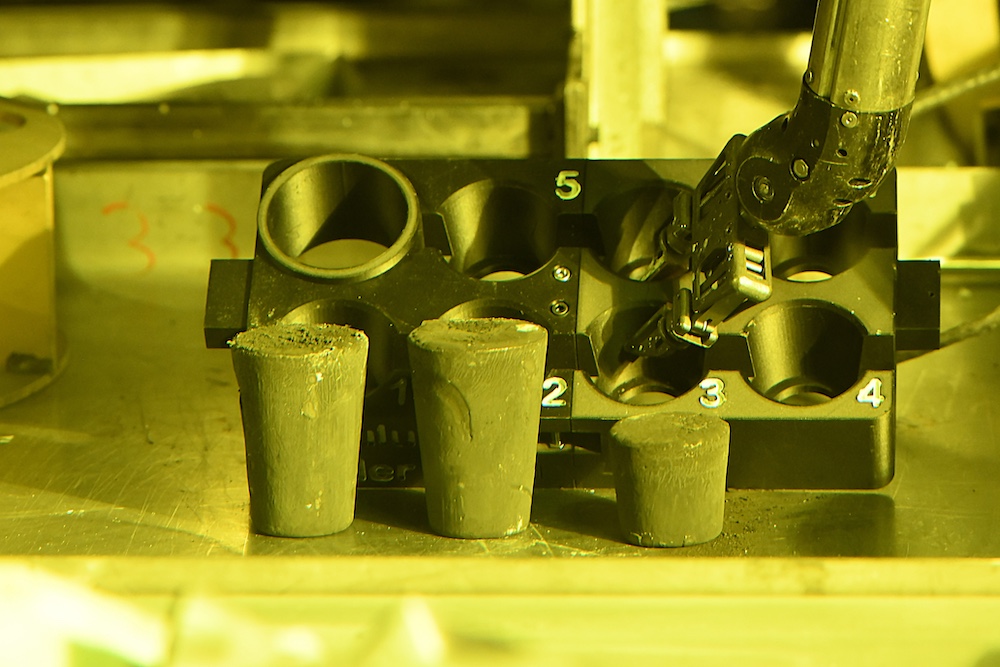
Once we entered the next room, eating, drinking, or even applying lip balm would not be allowed, the staff member told us, while also making sure we were wearing closed-toe footwear and quizzing us on any recent radiopharmaceuticals, which could set off alarms. Then, we went inside. In one facility, workers used inert atmosphere glove boxes, reaching their hands into long, heavy gloves attached to openings in the clear boxes, manipulating samples within. In another, people operated robotic arms, handling particularly radioactive samples behind five-foot-thick windows. On the way out of each building, each person was tested for radioactivity.
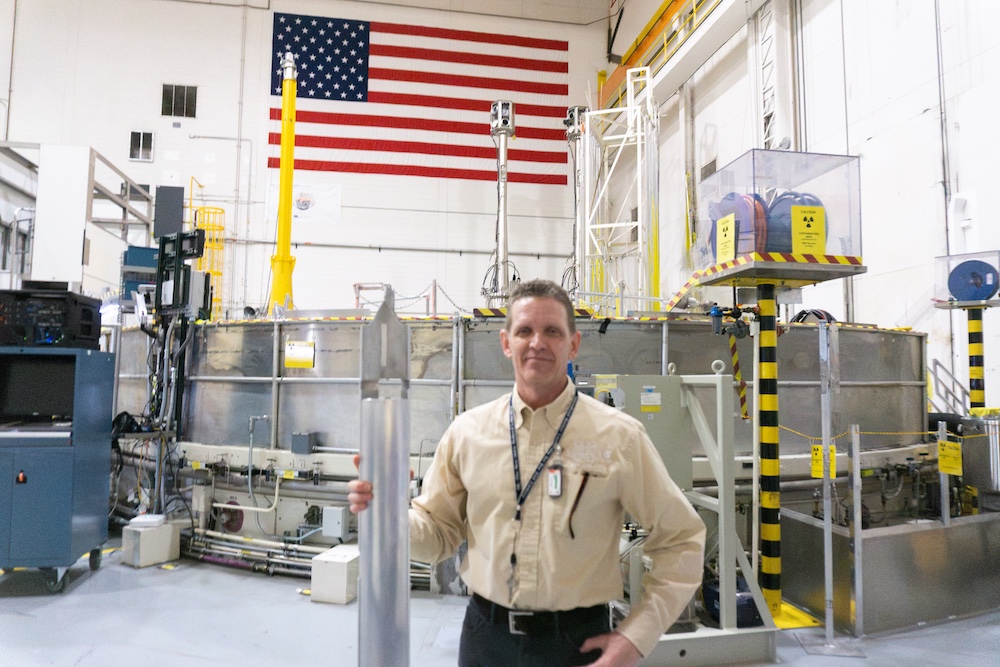
I was touring Idaho National Laboratory’s (INL) massive campus deep in the desert of southeastern Idaho to learn more about its work developing and testing a whole new generation of nuclear fuels. Kevan Weaver, Chief Technical Officer for the INL Advanced Test Reactor—who began working there in 1998, spent years working at the nuclear energy company TerraPower, then returned to INL in 2018—says he’s observed a growing interest in nuclear energy development in recent years. He calls the new developments, many of which promise to improve on the technologies of the past, “the beginning of the nuclear renaissance.” INL, one of 17 national labs overseen by the US Department of Energy, is helping to advance that renaissance. But it can take a lot to bring these technologies to market.
Most commercial nuclear power plants currently operating in the US are light-water reactors, which use water for cooling and typically run on fuel rods containing low-enriched uranium. While these designs work, they have a few disadvantages that advanced nuclear fuels and reactor designs are trying to solve: the need for extensive concrete and steel structures to contain radioactivity, fuel that is more vulnerable to melting at high temperatures, and the need to refuel approximately every 18–24 months.
Tristructural isotropic particle fuel (TRISO), which is popular across several new reactor designs, aims to address these concerns. “It can go to much higher temperatures than what our existing fuel forms can go to, [and] the coatings provide additional protection against radiation releases,” says James Corson, senior reactor systems engineer at the US Nuclear Regulatory Commission’s Office of Nuclear Regulatory Research. Because of this, TRISO is sometimes referred to as the “most robust nuclear fuel on earth.” Weaver says it’s so robust that it can be used for space applications.
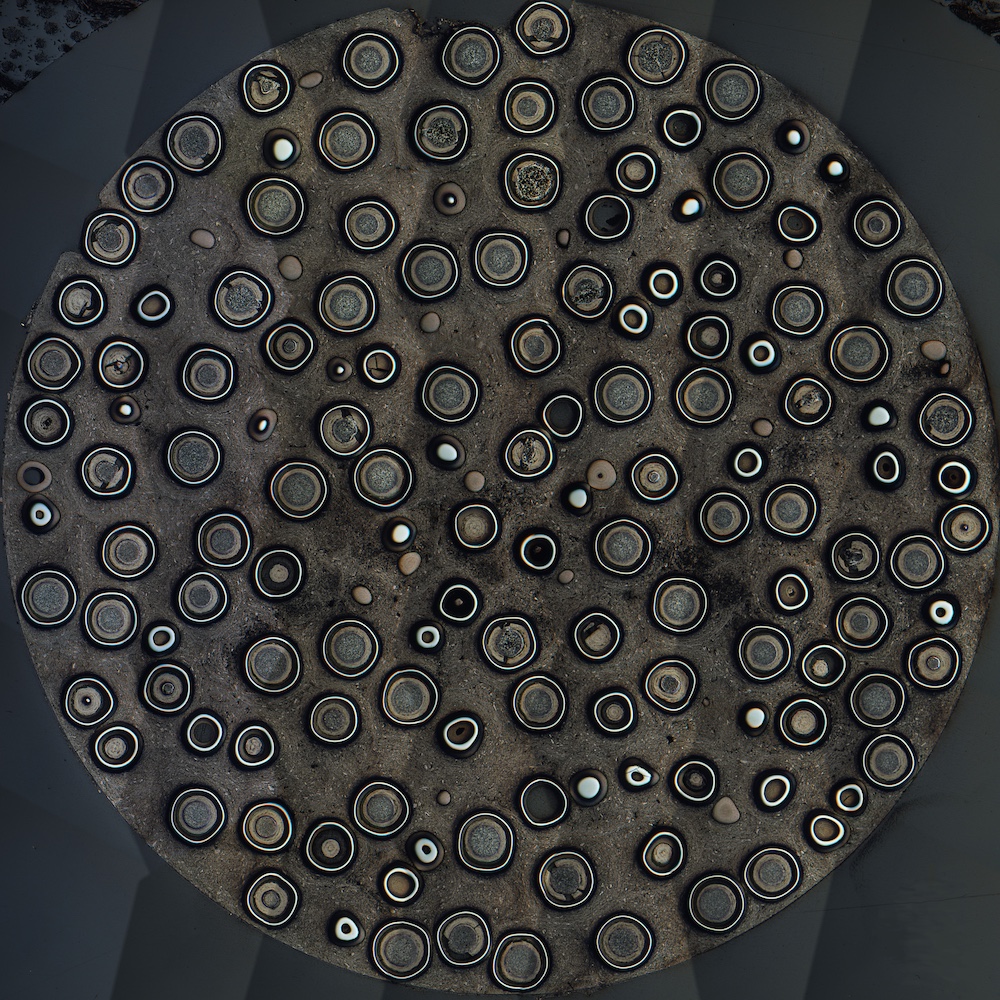
With TRISO, each tiny kernel of uranium is surrounded by three layers of carbon and ceramic-based materials that essentially act as a containment system for the uranium within. An inert model of these particles on Weaver’s desk looks like a vial of poppy seeds. When used in reactors, thousands of the tiny TRISO particles are placed in a larger form, such as a graphite matrix, to keep them from shifting or settling unevenly.
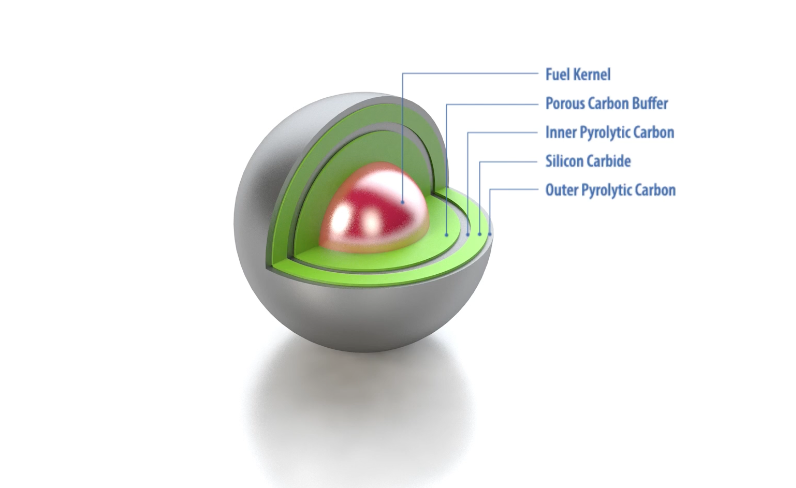
“Those coatings are the key which then turns them into what we call little ‘pressure vessels,’ meaning that nothing escapes, and if they do fail, you don’t have a cascading effect where you have a bunch of them fail,” Weaver says, noting that even if particles were to fail, most of the radioactivity would still be contained within the outer materials.
Weaver points out that failures are generally associated with high temperatures melting the fuel, such as the incident that occurred in 2011 at Japan’s Fukushima Daiichi Nuclear Power Plant. However, TRISO pellets can withstand temperatures of more than 1,800 degrees Celsius (over 3,000 degrees Fahrenheit) before they start to break down, and “if you look at the temperature curves for a fuel when you get into accident scenarios, it turns out you don’t go past that,” he says.
TRISO was first developed in the 1960s, but never reached widespread use due to its high cost relative to conventional fuel rods. Now, advanced nuclear companies like X-energy, Kairos Power, and BWX Technologies (BWXT) are working to scale up this fuel for both military application and the commercial market.
This includes the Pele demonstration microreactor BWXT is developing for the Department of Defense, which will be able to fit into four 20-foot-long shipping containers for easy movement. In late 2025, BWXT began building the reactor core and completed fabrication of the TRISO fuel intended for the reactor. The full prototype is scheduled to be assembled and tested at INL as early as 2027, with hopes to be operating by 2028.
The TRISO for Pele was manufactured at BWXT’s facilities in Lynchburg, Virginia, but BWXT is working on commercial-scale fuel production, with plans to build a TRISO fuel fabrication plant in Gillette, Wyoming. Construction for that is slated to begin in 2028, with the plant expected to become operational in 2030 or 2031. BWXT also announced that it would collaborate on TRISO fuel production with Kairos, which is currently constructing the nation’s first TRISO-using, next-generation demonstration reactors in Oak Ridge, Tennessee.
While plans for bringing TRISO to market are moving forward, sourcing the appropriate kind of uranium for the TRISO particles, and for other advanced nuclear fuels, remains a challenge.
Many modern advanced nuclear reactor designs, including BWXT’s and Kairos’, propose to use high-assay, low-enriched uranium (HALEU) for their fuel. Unlike the low-enriched uranium of today’s light-water reactors—which contains just 3–5 percent of the fissile (able to be split) isotope of uranium, U-235—HALEU has a U-235 concentration of 5–20 percent. To reach the 5–20 percent concentration for HALEU, the fuel must be made either by down-blending from highly enriched uranium or enriching low-enriched uranium to reach the desired concentration.
In addition to being used in TRISO, HALEU can be used in other advanced nuclear fuel types, including metallic, ceramic, and molten salt technologies.
The use of HALEU-containing fuels allows for smaller reactor sizes, more efficient electricity generation, reduced volume of waste, and the ability to operate for longer periods of time between refueling. “Instead of 18 or 24 months, [it is] years,” Weaver says. “Five years, some people are talking eight years. That’s a huge difference [in] tech, so that’s why the HALEU becomes important.”
However, obtaining commercial quantities of HALEU is not currently possible in the US. The Russian Tenex plant is able to supply commercial quantities of HALEU, but geopolitical issues prevent the material from reaching American facilities. In 2024, the Prohibiting Russian Uranium Imports Act (H.R. 1042) banned the import of certain types of uranium from Russia. While the US government is allowing limited waivers for energy-security purposes, additional Russian export restrictions have made it incredibly difficult for companies to source uranium via this route. The US is working hard to ramp up its domestic supply chain in response, but only a few domestic facilities are producing small amounts for testing.
This creates a chicken-and-egg-scenario for operators who want to make sure they have a continuous supply of fuel, to ensure steady operations, before constructing a power plant made to operate on that specific type. On the other side, fuel producers want to make sure they have buyers before investing in production facilities.
Despite the challenges, TerraPower’s Natrium plant in Kemmerer is “on track to be the first utility-scale advanced nuclear power plant in the United States,” according to the company’s website. It doesn’t use TRISO, but it does use a HALEU metallic fuel. Construction began in April 2026 and the plant is expected come online in 2030 or just after, eventually producing enough energy for 400,000 homes.
For BWXT, planning for growth is a balancing act. “You want to make sure you can always meet the demand of the customer base without spending too much capital or human capital investment too early and have overcapacity,” says Clay Richardson, Vice President Advanced Fuels at BWXT. “So, it’s really working with your customer base, trying to make sure you’re staying ahead of the market and being able to adjust appropriately when needed. You also need to understand the dynamics of how long it would take to scale up and make sure that your facility is able to meet the demand when it occurs.” The company considers all these chicken-and-egg-factors when planning its next strategic moves.
As next-generation nuclear companies work to plan their future, INL continues to support them through the creation of HALEU, the development of advanced fuels, and many kinds of testing to improve the safety and efficiency of nuclear technologies.
Covering 890 square miles, INL is located around 45 miles from the city of Idaho Falls. It has built and operated 52 reactors on-site since 1949 and has seen many firsts over that time, including the first usable electricity generated by a nuclear reactor. Today, thousands of workers continue to push for new nuclear innovations.
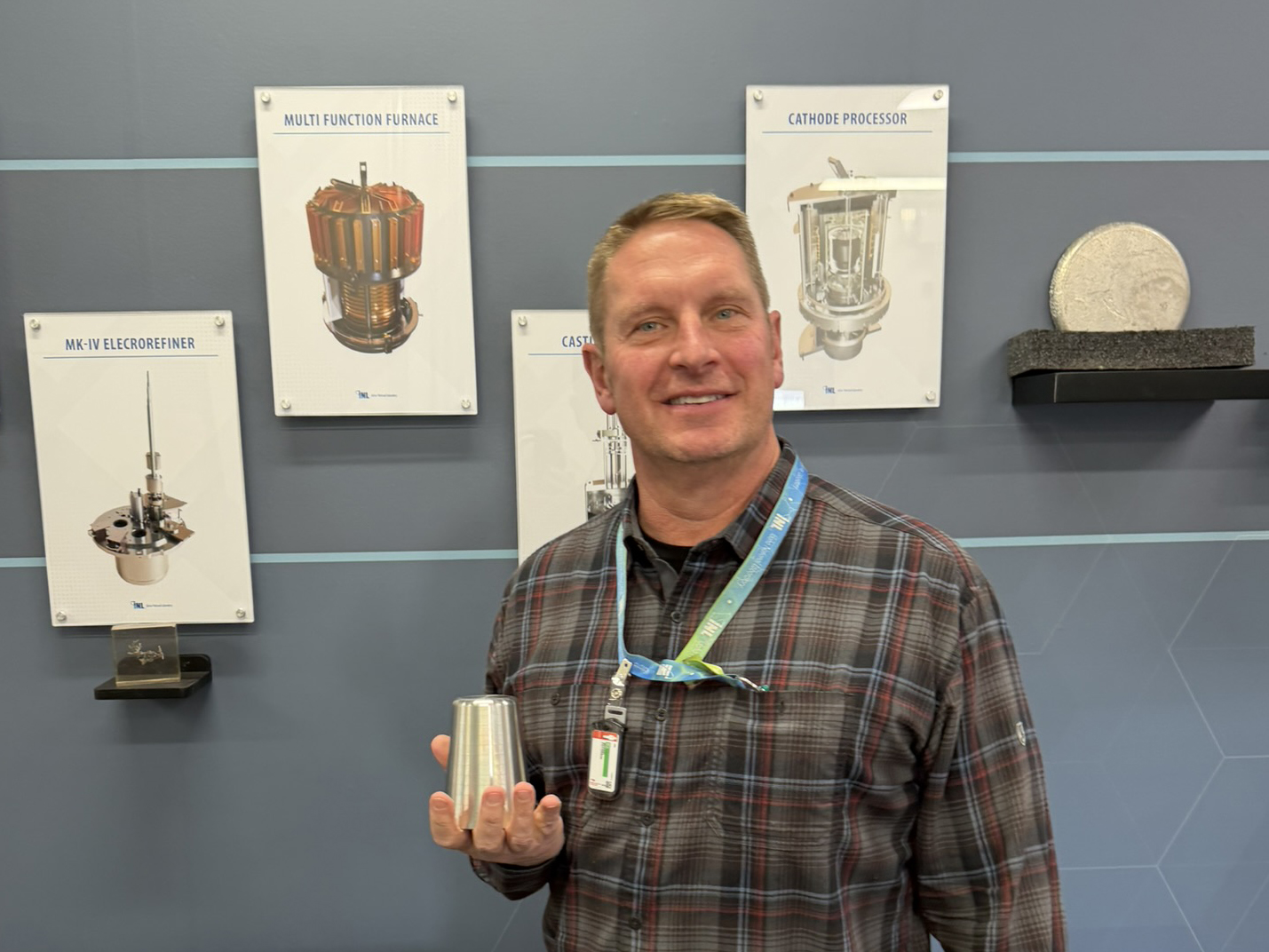
At INL’s Fuel Conditioning Facility, a thick-shielded cask of material arrives each week. It contains spent fuel from the Experimental Breeder Reactor-II, which operated from 1964-1994 on highly enriched uranium fuel. Now, that spent fuel is being recycled into HALEU.
After the cask’s delivery from the breeder reactor’s in-ground storage facility, workers use mobile command arms and overhead mechanical manipulators to access the radioactively hot material while on the other side of approximately five-foot-thick walls and leaded-glass shielding. They use electrochemical processing to separate the highly enriched uranium out of the spent fuel, then add the non-fissile isotope of uranium to dilute it to under 20 percent U-235. After processing, the newly created HALEU leaves in a smaller container with much less shielding, since the radioactivity has been significantly reduced.
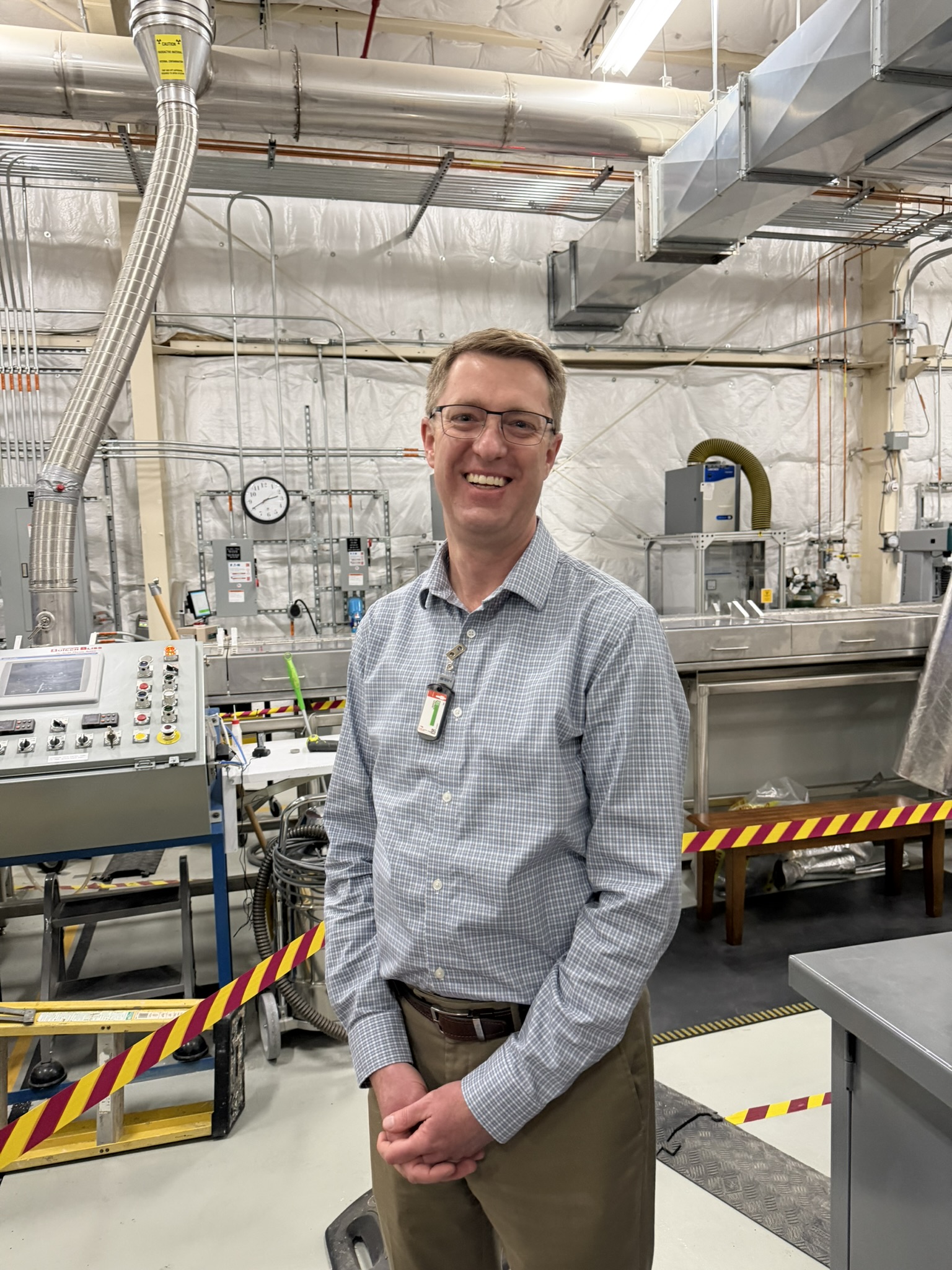
“Our mission here is to take used fuels and recover uranium from them, and we’ve been doing that now in some form or another for the past 60 years here at the facility,” says Michael Patterson, program manager at the Fuel Conditioning Facility. INL expects to recover around 10 metric tons of HALEU through this particular initiative.
In addition to recycling fuel, “We support manufacturing and fabrication development for advanced fuel types,” says Patrick Hogan, senior manager of fuel fabrication and nuclear materials management. This includes metallic fuels, where uranium is blended and alloyed with metals like zirconium; molten salt technologies, which can use liquid salt to carry fissile U-235, or as a coolant, or both; and a variety of ceramic fuels.
Once fuels are developed, they can be moved to INL’s Advanced Test Reactor for testing. The 250-megawatt reactor has been in operation since 1967 and is the highest power test reactor in the world.
The Advanced Test Reactor bombards samples with neutrons at a rate that can simulate years of exposure in a short period of time, using a neutron intensity that is 100–1,000 times higher than in a commercial power plant. “We can do what [are] called accelerated radiations,” Weaver says. “What would take 10 years in a commercial power plant takes about a year with our reactor. So, you get the answer much sooner.”
The cloverleaf-shaped vessel offers 77 test positions, allowing a variety of different experiments to occur at the same time under a range of simulated conditions. Some samples, for example, can be placed further from the reactor’s fuel for lower-intensity testing, while closer ones experience greater intensity. Experiments can include everything from testing next-generation fuels and shielding materials to other trials related to space, defense, or medical uses.
The Advanced Test Reactor conducts testing for government agencies like the Department of Energy and Department of Defense, as well as private entities and universities. Weaver says 80–90 percent of the 77 positions are filled with experiments at any one time.
As INL works to develop and test an array of advanced nuclear fuels, Weaver notes that these emerging and advancing technologies point to a bright future. “I think people are really waking up to the fact that nuclear is part of the solution to the energy problem,” he says.
Kristen Pope is a freelance writer and editor near Jackson Hole, Wyoming.
Header image: Workers remove fuel from Idaho National Laboratory’s Advanced Test Reactor. (Idaho National Laboratory)