How a gun sights manufacturer might help build the next nuclear microreactor
By Ezra Stepanek
At the end of my tour of HIVIZ Shooting Systems, Brian Steinert shows me the two machines that could change the future of this small business. Based in Laramie, Wyoming, HIVIZ has been manufacturing high-end firearm sights for 30 years. Their two manufacturing floors are filled with machines that cut, heat, mold, and etch the many tiny parts that get assembled into aiming devices with names like “BirdBuster,” which can be mounted on shotguns, handguns, and rifles.
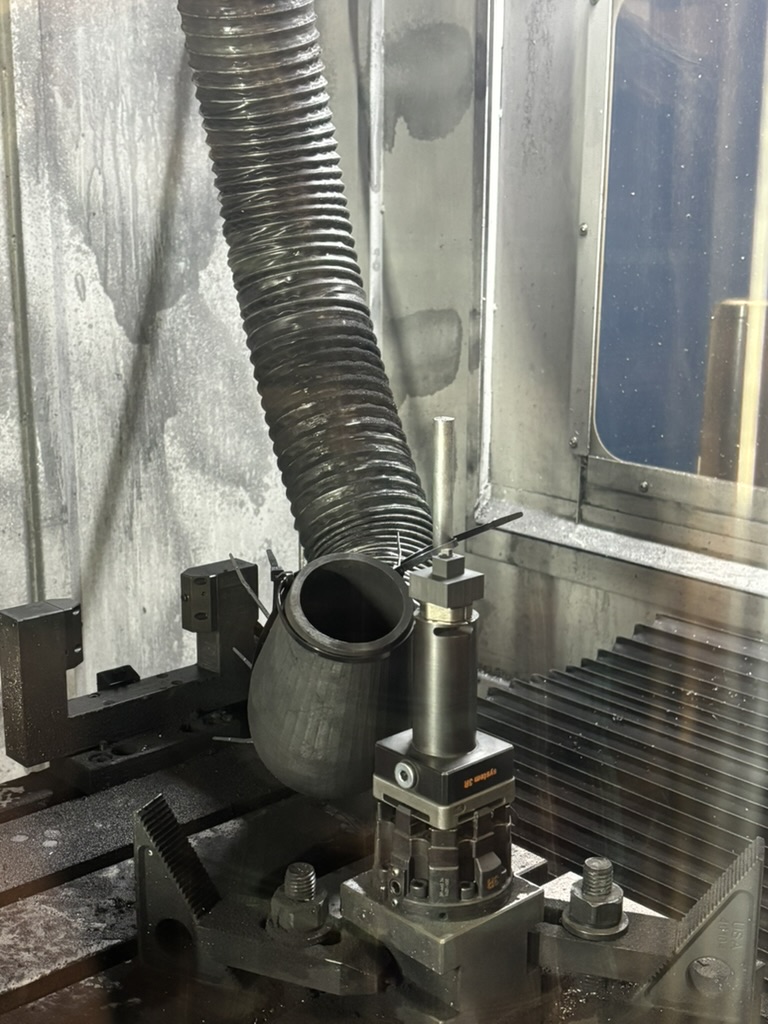
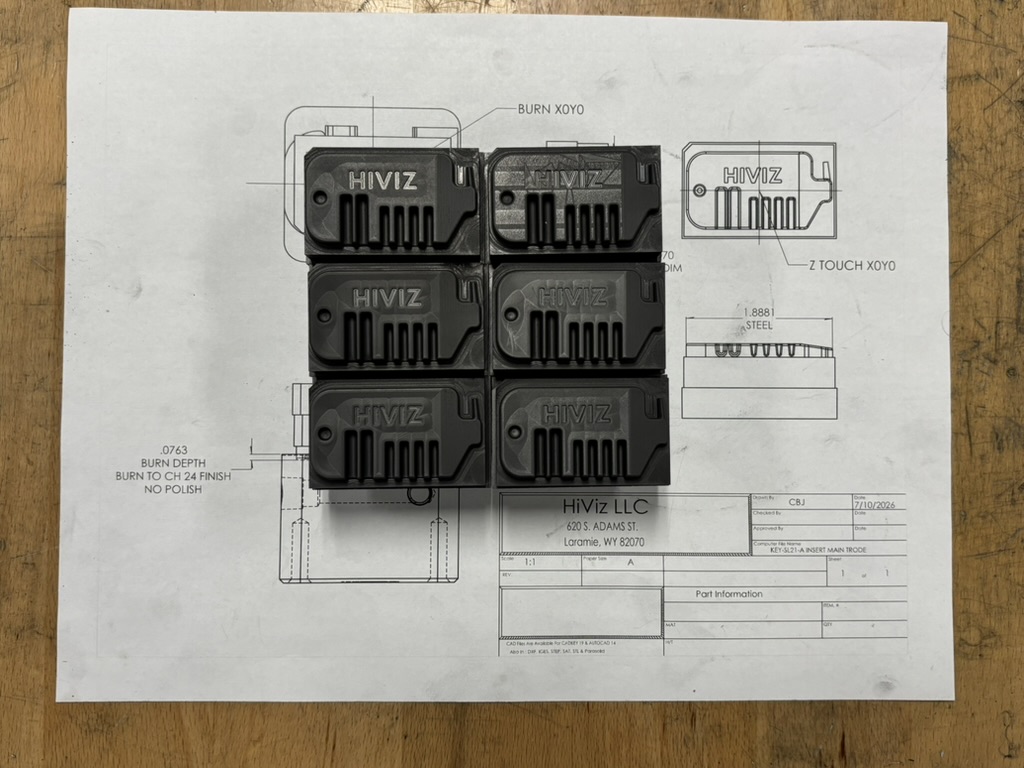
Tucked away behind a wall, on the far side of the manufacturing floor across the parking lot, are two Computer Numerical Control (CNC) machines that can carve graphite. Like all the CNC machines taking up most of the floor, they are computer-automated to cut a block of material into the desired shape. Unlike those machines, which are dedicated to cutting steel and aluminum and are “a dime a dozen,” according to Steinert, these graphite specialized machines are much rarer in the manufacturing world.
For now, the graphite pieces they create are an intermediary step in the manufacturing process. But after connecting with BWX Technologies (BWXT), a nuclear engineering and manufacturing company that was looking to have graphite parts made for its nuclear microreactors, graphite could become a HIVIZ product in a very different way. Now when HIVIZ thinks about the future, Steinert says, “A big part of HIVIZ’s growth could be trying to get into this nuclear sector, and this graphite is our entryway.”
It all began in 2024, when HIVIZ attended a conference hosted by BWXT and Manufacturing Works, a University of Wyoming center that provides technical assistance and business support to Wyoming manufacturers. The conference was one of several held around the state to introduce BWXT to potential Wyoming-based suppliers.
BWXT had been working with the Wyoming Energy Authority for a couple of years to explore the viability of deploying nuclear microreactors in Wyoming, particularly for use in trona mining and processing. Part of that exploration involved finding out if existing Wyoming businesses were capable of manufacturing components for the reactors and then awarding contracts to demonstrate those supply chain capabilities.
The Wyoming Energy Authority invited HIVIZ to attend the Laramie conference, where HIVIZ learned one of the services BWXT was looking for required machining graphite. They submitted a bid to BWXT’s call for proposals to manufacture prototype graphite parts for a nuclear reactor and won the project.
“We were very happy to get the project because it was one of our first outside of the firearm space,” says Steinert. “I know our capabilities gave us an edge,” he adds, because “we were the only supplier that could manufacture one of the two test components.”
HIVIZ’s experience reflects a larger trend in the growth of the nuclear industry: There are lots of business opportunities that don’t deal directly with nuclear fuel and nuclear energy. Mike Wandler, president and CEO of L&H Industrial in Gillette, Wyoming, says, “It’s the first time I remember in my 40 years that there’s an entire supply chain that needs set up,” making it “a great opportunity for anybody in the world to jump in.”
L&H has manufactured all kinds of large machine parts for the energy sector, from haul truck parts used in open pit mines to wind turbine components. Now, they’re ahead of the curve when it comes to manufacturing for nuclear energy, already boasting a separate team and floor that are certified for nuclear parts production.
Wandler is extremely hopeful for the future of nuclear energy in Wyoming and wants to see other businesses in the state join L&H to set up a full nuclear supply chain. “I want Wyoming, since we are a manufacturing and we are an energy state, to raise our hand,” he says. “I would love there to be three vendors [in Wyoming] for everything that you could possibly need to build a reactor.”
The first step is building and solidifying relationships with nuclear companies. These companies “can’t afford problems and mistakes,” so they “are very risk averse” and “don’t really shop around,” says Wandler. “If they get really good quality and really good service, they’re going to stick with you.”
HIVIZ is taking that advice. During the process of machining the prototype parts, BWXT came and toured the HIVIZ facility to get a better understanding of their capabilities for potential future work. The morning of that tour, BWXT got an email from MIT, which has a miniature test reactor that Steinert says is “incredibly difficult to get time in, they’re blocked out for years.” But, he says, “a window came open that if we could turn around product in a week [to go into the test reactor], it was going to be a really big deal.”
HIVIZ was able to take some of the graphite they were already machining for BWXT and create bars that would be tested to ensure the graphite could withstand the effects of nuclear radiation. “We got a lot of kudos from BWXT for that because it was just like, ‘Wow, you turned this around really quickly.’ That put a feather in our cap,” says Steinert.
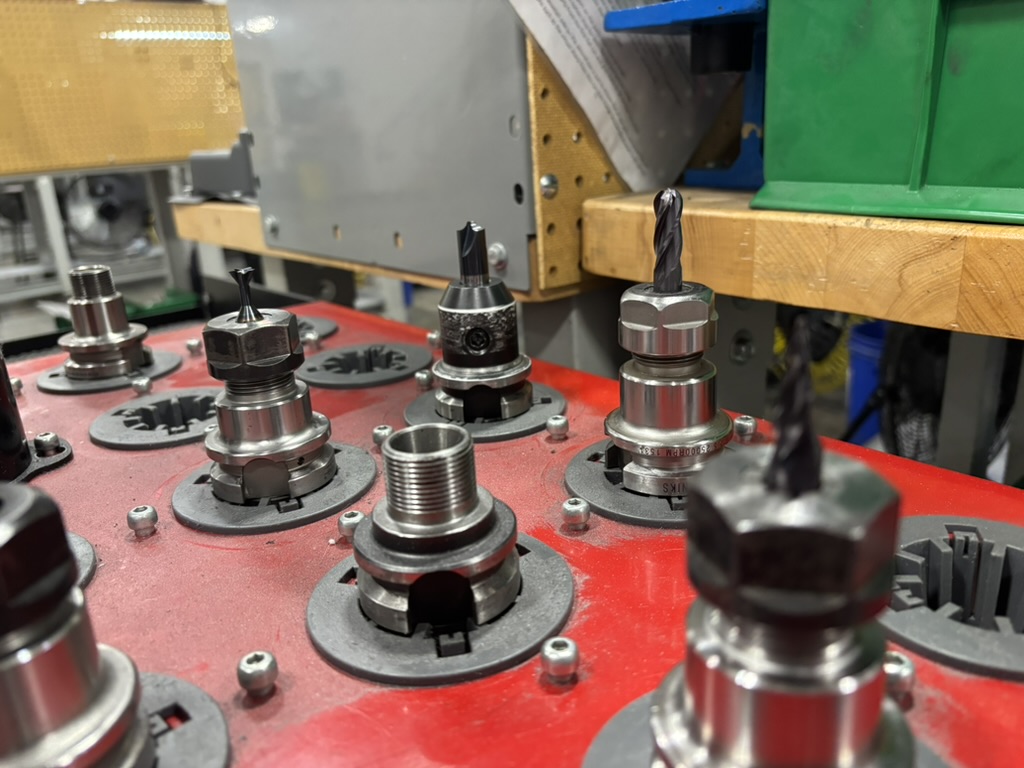
To move from manufacturing prototypes to actually producing nuclear-grade parts at scale would require upfront investment in equipment and nuclear certifications.
BWXT could eventually need tons of graphite. “Literally the unit of measurement tons, not like, a lot,” says Steinert. “If it got to that stage, you could have a dozen machine shops in Wyoming [machining graphite] and there’d still be barely enough to keep up with [BWXT’s] needs.” HIVIZ isn’t set up for that kind of volume right now, and while they have started looking at getting more equipment, that would be a big capital expense, Steinert says.
Also, “If we were to scale this and we were going to do a non-prototype contract with BWXT, we would need to get more certifications,” says Steinert. Generally, these involve extensive documentation, meticulous quality assurance programs, and regular inspections to minimize the risk that component failure could lead to a nuclear accident.
Certifications aren’t cheap, however. Just to get ISO 9001 certified, which is the minimum barrier to get into nuclear projects, can cost a small business up to $40,000. NQA-1 certification, the certification required for manufacturing safety-related parts that L&H has, is even harder to get. “That’s not really feasible for most manufacturers and definitely not manufacturers our size,” says Steinert.
According to Wandler, “You have to be able to see millions of dollars’ worth of work in order to make it worth it to do the transition.” But BWXT, the state of Wyoming, and other companies are trying to make it more accessible. BWXT is working to develop a program where they will, “in a sense, hold your hand through it,” says Steinert.
Until then, “it’s a commitment,” Wandler says, “but there are incredible opportunities.” His advice is “Don’t replace what you’re doing with [nuclear manufacturing]. Add it if you want to grow and diversify your manufacturing and repair or service business.”
That’s exactly what HIVIZ is doing. “Right now, we’re kind of in a limbo stage where we can’t buy five machines and get going because nobody’s really ready with these small reactors,” says Steinert. That doesn’t stop them from continuing the work they’ve done for decades— almost every single machine I saw on my tour of their facility was busy working on its respective stage of the sights manufacturing process. But at the same time, they’re taking the steps to be ready if and when the nuclear boom takes off.
When it does, it won’t just mean something new for HIVIZ. “When you’re bringing in [nuclear construction and manufacturing work], guess what? Now you need housing, now you need restaurants. It floats all boats,” says Wandler. “Let’s capitalize on that and set up jobs for our future generations. . . . Let’s give them a choice to stay in Wyoming with a great job.”
Ezra Stepanek is a recent University of Wyoming graduate and current master’s student in the Haub School’s Environment, Natural Resources and Society program.
Header image: Computer Numerical Control (CNC) machines that can carve graphite are relatively rare in the manufacturing world, but HIVIZ has two of them. (Ezra Stepanek)