Growth and growing pains as nuclear energy comes to Wyoming’s oldest continually operating coal town
By Birch Dietz Malotky
Ken Spears, Kemmerer city councilman, remembers hunting rabbits as a kid, out at the old dump on which his house now sits. He and his wife, Joan, have lived in that house for 48 years, during which time dozens of neighbors have cycled through, some staying for just three months before leaving again. His family has been around Kemmerer, the seat of Lincoln County in southwest Wyoming, for over a century. “I’ve seen the ups and downs,” he says, recalling a time when the city had 25 softball teams: 16 men’s and 9 women’s. “Now it’s hard to get one co-ed team together.”
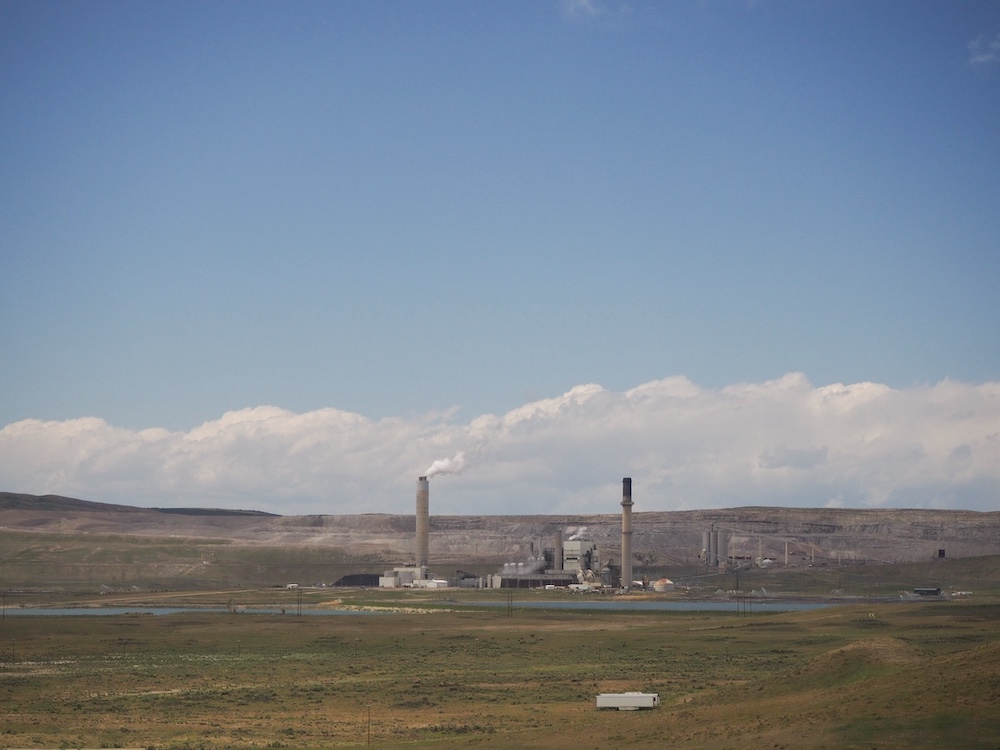
Kemmerer and the geographically contiguous town of Diamondville were both coal towns founded in final years of the 19th century. The coal mine, where Spears worked for 38 years, has remained the backbone of the community—the largest employer and the number one taxpayer—for decades. It built the town’s golf course with its earth movers, Spears says, and has been a strong supporter of the school and local nonprofits. But even he isn’t optimistic about the mine’s future, after years of declining production and the recent loss of its biggest customer, the Naughton Power Plant, which was built outside Kemmerer in 1963 and is currently having the last of its three units converted to burn natural gas instead of coal.

Things looked especially bleak back in 2019, when the utility PacifiCorp originally planned to fully retire two of Naughton’s units by 2025. The region still had lots of industry, but residents described the time after PacifiCorp’s announcement as gloomy, dire, and scary. The town was one step away from a ghost town, Spears says. Trying to prevent that is what prodded him—in his 70s and with nice camper, a penchant for hunting, and a big, loving family complete with three great grandchildren—into government service.
In 2021, when nuclear engineering company TerraPower selected Kemmerer as the site for its $4 billion, first-of-its-kind Natrium power plant, Spears was all for it. The company, which was co-founded by Bill Gates and won $2 billion for the project from the Department of Energy’s Advanced Reactor Demonstration Program, says it picked Kemmerer in part to fill the hole the retiring power plant would leave—in energy production, employment, and the tax base. At the time, breathless predictions of prosperity and growth swirled alongside skepticism that the new age technology was just another tantalizing fantasy Wyoming’s winds would one day blow away.
Five years, one Nuclear Regulatory Commission permit, and two ground-breaking ceremonies later, it’s finally starting to feel real, says Jesica Lozier, president of the Fossil Basin Chamber of Commerce. “Once they started building to where you could see it from the road, I think that kind of solidified it in people’s minds,” she says. Now, people are excited, and “when people are excited, exciting things happen.”
The nuclear plant won’t be up and running for another 5 years or so, if everything goes according to plan. But already the downtown has transformed from mostly empty storefronts to nearly full of new businesses. People are moving, and moving back, to town. Housing developments are proposed and under construction, and impact assistance funds have started flowing into county and municipal budgets. It’s a moment of optimism, when the future feels secure enough to make investments, and there’s still time to prepare for the expected impacts of such a big development, including a workforce peak equivalent to two-thirds of the town’s population.
But the anticipated growth is also acting like a stress test, exposing weak points in the system. Challenges like aging infrastructure—which Kemmerer and other small towns have been deferring for years—create big questions about how city and county leaders will meet housing and public service needs if the area really booms, and where they’ll find the funding to do so.
An air of optimism
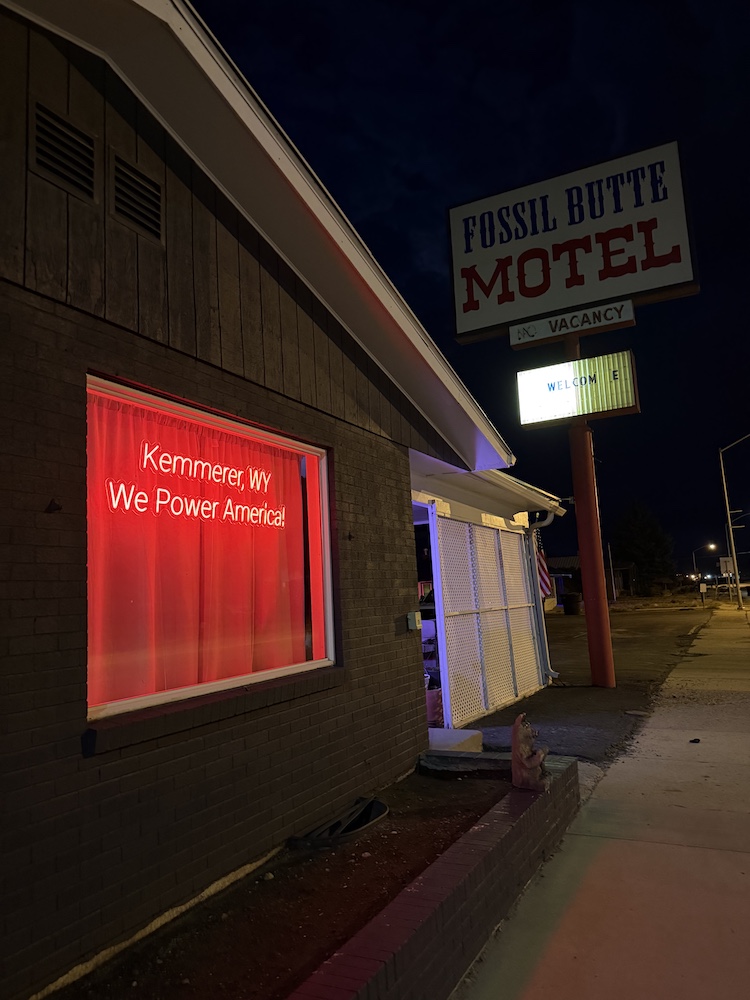
When Kemmerer-Diamondville was one of four sites under consideration for the Natrium plant, a survey attached to the monthly water bill found 83 percent of respondents supported “bringing advanced nuclear power to South Lincoln County.” Lozier and others credit the high acceptance rate to the town’s long history with industry, from the early coal mining days, through a whirlwind oil and gas boom in the late ’70s and early ’80s, to the present.
Today, just 33 miles northeast of Kemmerer, ExxonMobil’s Shute Creek facility employs hundreds to produce natural gas and 20 percent of the world’s Grade A helium, recently supplanting the coal mine as the county’s biggest taxpayer. Clustered around the Opal Hub just 16 miles away, a bevy of other companies extract, process, and transport oil and gas in pipelines that stretch across the West and into Canada. In Sweetwater County, the next county over, thousands work the world’s largest deposits of trona, a mineral used in glass, paper products, detergents, and more. Two trona mine expansions, a second helium plant, and a solar farm have all been permitted, and an expansion of carbon capture and storage at the Exxon plant is underway.
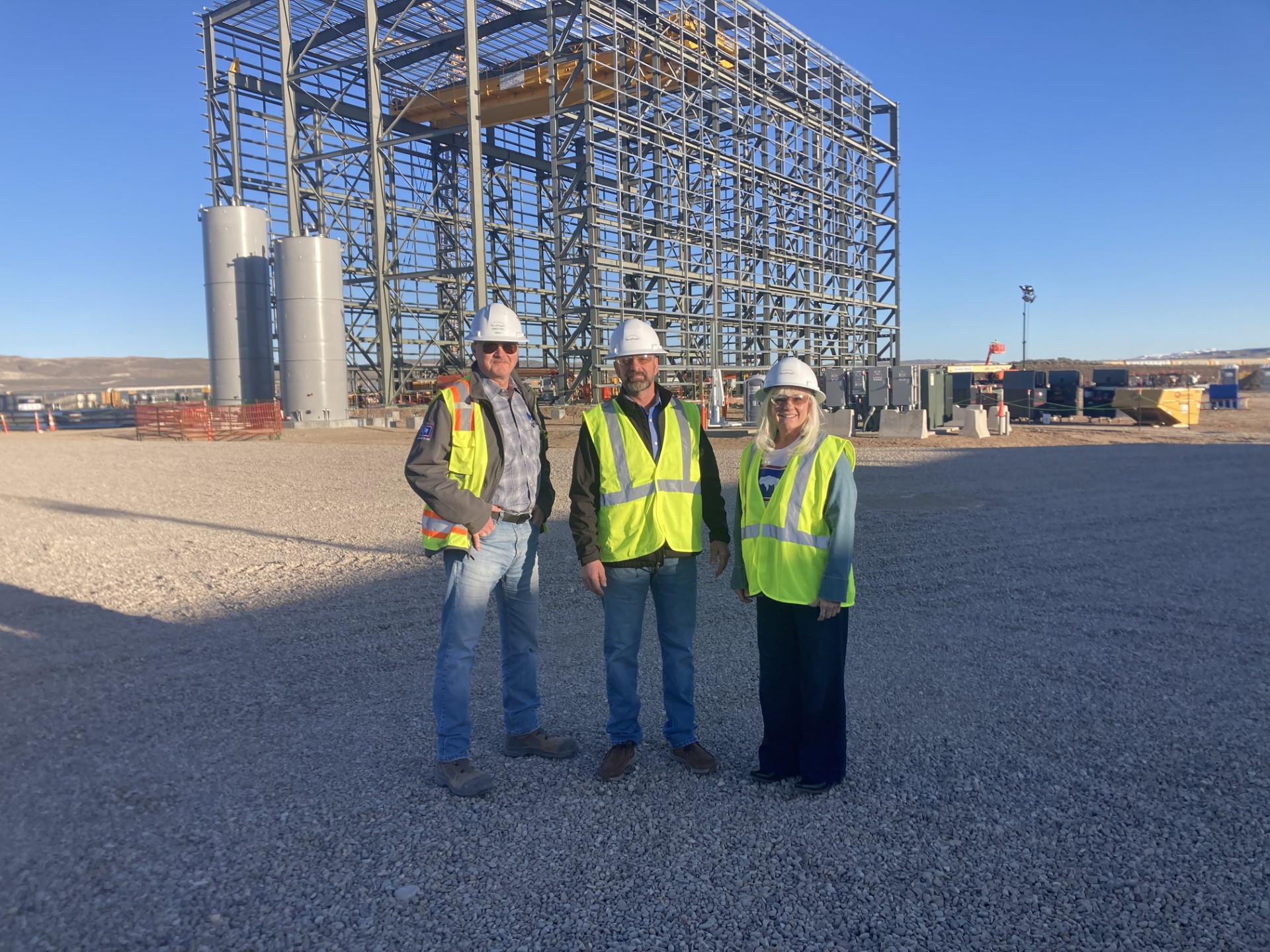
“The people here are used to having industrial sites that close to town,” says Lozier. “They love industry, and they are familiar with it, and they’re supportive of it.” Not everybody is thrilled, she says—about nuclear generally or TerraPower specifically—but the majority don’t mind it. For many, “the plant coming to town has given them the courage to open small businesses and feel confident that they’ll be successful” she says. For others who have been running successful businesses in Kemmerer for a while, it’s the right market to sell and finally retire.
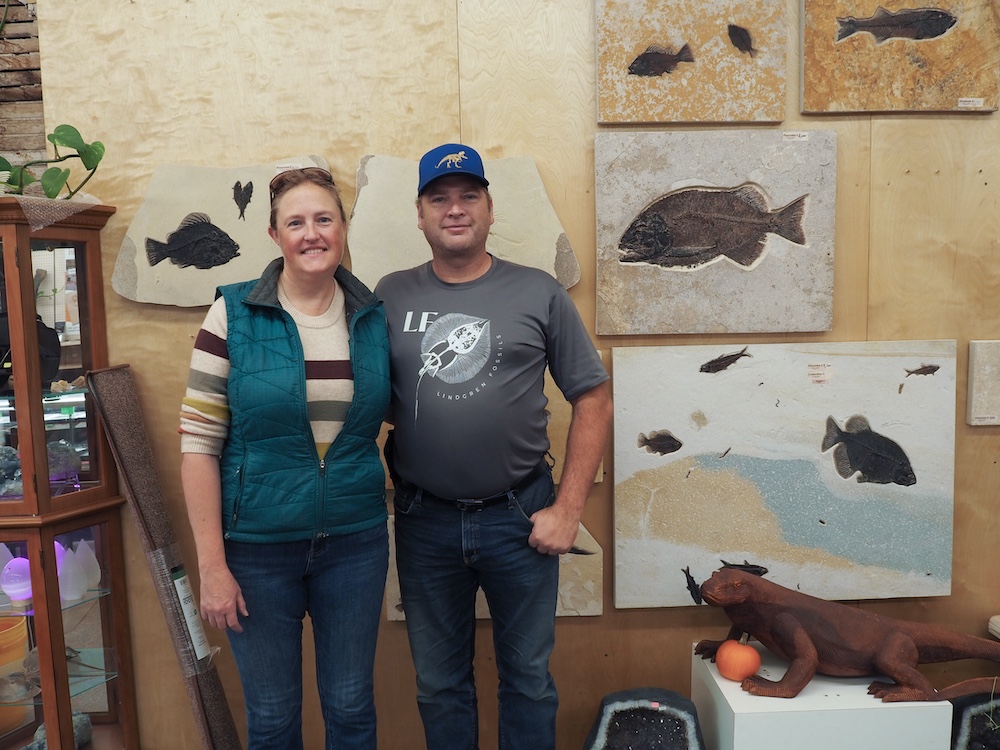
She rattles off a list, most of which have been bought, sold, started renovations, or opened in just the last year or two. There’s a steakhouse, a wellness spa, a coffee shop, a bar, a soda shop, a law office, a restaurant or two, the bowling alley, and an office building with five full rentals in it that were all empty last year. Others name a credit union, a title company, a 3-D print shop, a fossil preparation studio, and a possible True Value (one of the few chain businesses mentioned). It’s a lot of local people investing back in their community, Lozier says.
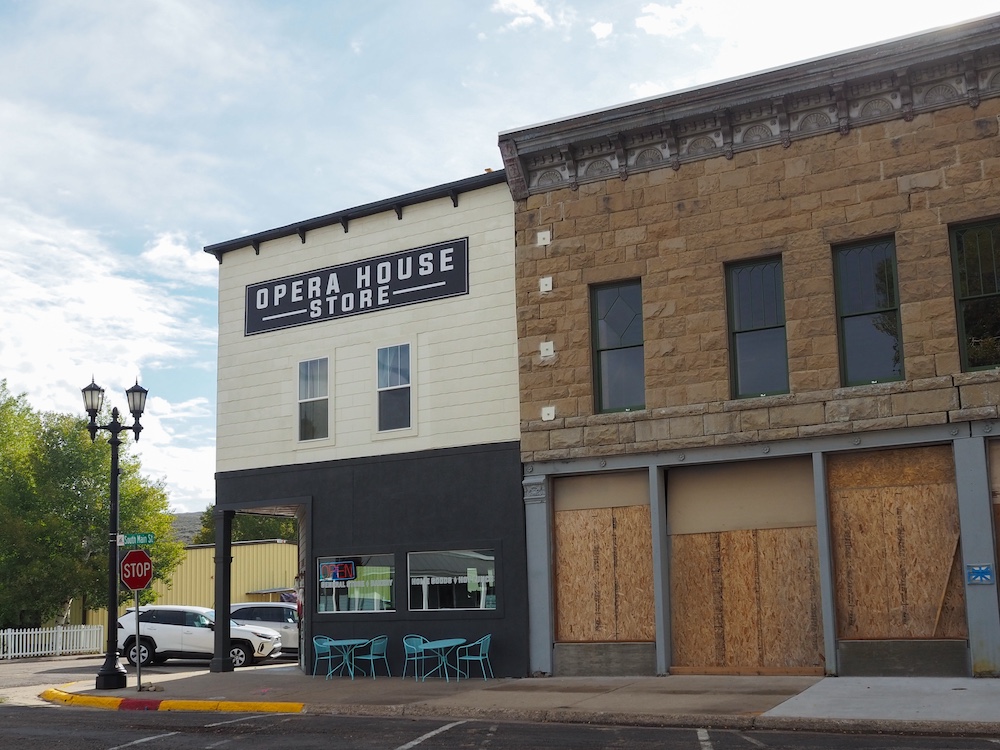
Lozier herself renovated the old opera house, the first building in Kemmerer, and opened The Opera Store. They make a mean focaccia and have a retail floor supplied in part by local vendors: sheepskin and meat, teas and balms, ice cream and t-shirts supporting the high school sports team. “I just wanted Kemmerer to have somewhere fun downtown where people could have lunch and hang out,” she says. Next door, the original JC Penny building, which had the first elevator in Wyoming and has been vacant for 50 years, is finally being renovated into a retail, office, and event space. Both buildings overlook Triangle Park, the triangular green space around which downtown wraps.
A group of women, Lozier among them, resurrected the chamber of commerce from the dead three years ago with the goal of making Triangle Park the “front porch” of this city of 2,400 residents. They’re self-funded, applying for grants for new paint, tables, and a firepit, and holding an annual gala, which TerraPower purchased a table at, that helps staff the visitor’s center. This year it was open all summer for the first time. They asked visitors what brought them to Kemmerer, and about 25 percent of them said, “You know what? We were driving through and it just looked cute and we wanted to stop,” Lozier says.
That’s what she wants to hear. It’s the kind of thing that brings back young families whose parents liked growing up in Kemmerer but left because they thought it was going downhill. “They’ve gone and gained work experience and now they can come back and contribute in a different way to the community, because they want their kids to grow up in a small town too,” says Lozier.
Getting people to stay
A big hope is that TerraPower, and all this other activity, will bring in new residents too, who will want to stay, join a dart league at the rec center, become a Little League coach, and buy things and property that will contribute to a strong tax base. Alan Bella, a local pastor, says the Living Water Community Church has already gained several new families: “They actually find Kemmerer refreshing, and have chosen to move here permanently because they like the lifestyle—the small town, the nature, the things we offer.”
That’s the ultimate goal of economic development says Sarah Dayton, liaison for the South Lincoln Economic Coalition. But to get there, Kemmerer can’t have people commuting in from other towns and counties because there wasn’t any housing available locally.
Dayton lives in Cokeville, a town of about 500 that’s 44 miles northwest of Kemmerer-Diamondville. She says most of her neighbors commute to the coal mine, or the power plant, or the gas plant. Seeing what industry means for her little community, and how TerraPower’s announcement gave people “the boost to hold on, and now they’re not just in survival mode, they’re thriving,” motivated her to take the job. She wanted to do her part to help keep the ripple effect “going and build momentum throughout the communities in south Lincoln County.”
Dayton creates snapshots of all the housing availability in Kemmerer, Diamondville, LaBarge, Opal, and Cokeville in Lincoln County, as well as bigger cities along the I-80 corridor like Evanston, Mountain View, Green River, and Rock Springs. TerraPower contacts her for the list whenever they have a batch of folks coming into town. They encourage their workers to stay locally, she says, because they want to be a good neighbor. It also helps with avoiding the wind, wildlife, snow, and road closures that can waylay Wyoming commuters.
Last May, from hotel rooms and RV spots to apartments and homes, there were around 2,000 units available out of 5,600 total in the area, with 189 available in Kemmerer. Those numbers can change fast—falling during the summer tourist season, when there are other projects like the power plant conversion, and because of events like the National High School Finals Rodeo. She expects they’re higher now, with winter coming.
At the peak of construction, as soon as next year, TerraPower will have 1,600 workers on site. That is expected to ramp down after one to two years, eventually settling at 250 permanent employees, or more if a second unit gets built. On top of the plant itself, TerraPower is building a training facility where anyone operating one of their plants anywhere in the world will have to study for up to two years.
“We want to focus on keeping their workers as much in Lincoln County as we can,” says Dayton. “Realistically, they’re going to have to go to surrounding communities just because of the availability. But the fact that we have the availability that we have and it’s expanding says a lot about how serious Kemmerer is taking this project.”
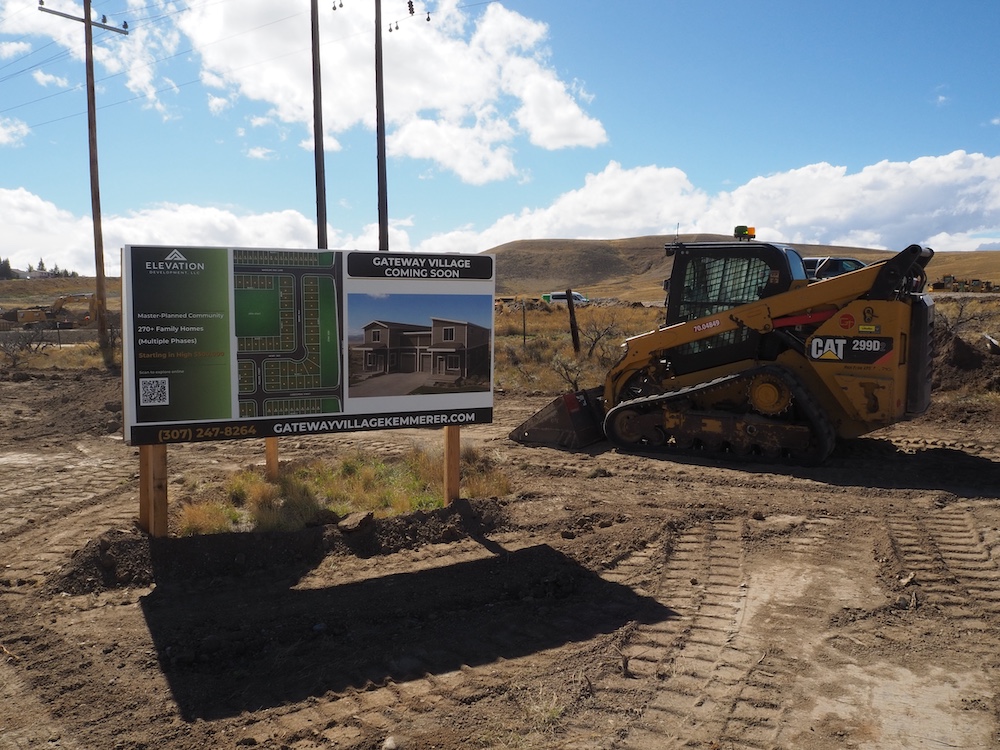
That expansion comes in many forms. 15–25 percent of the workforce will likely prefer to stay in their own RVs or trailers, so the RV park is working to add 83 new spots. The Gateway Village subdivision has already broken ground below Spears’s house, with plans for up to 147 factory-built, twin-home units in phase one, and larger, more “feature-rich” homes in phase two. The same developer, a coalition called Canyon Road Wyoming, holds another 290 acres south of town where they have proposed a first wave of up to 250 apartments and a commercial hub with a truck stop, hotel, and convenience store. A third development is targeting higher-end, custom-built homes.
News stories from the last year indicate that some of the new units were meant to be available by now, or by the end of 2026. As of late September, the crisp fall air, bare dirt at Gateway Village and unbroken ground at Canyon Road make that seem unlikely.
“The government only has so much influence over the private sector,” says Kemmerer Mayor Robert Bowen. “But we’re doing as much as we can to encourage private industry to get things built to absorb the impact that’s coming, without overbuilding.” A housing crash after the temporary workforce leaves is the last thing they want, he adds.
Bowen is one of the kids who was born in Kemmerer, left, and eventually came home. “There’s a magnet here,” he says. “It brings everyone back eventually.” For years, he split his time between an oil rig and digging for the region’s famous fossil fish, before moving into fossils full time, serving on the city council for a decade or so, then becoming mayor.
To help get housing built, he’s worked with the zoning board and city council to rezone the Canyon Road lots from agricultural to commercial highway and multi-family. They also changed city ordinance to accommodate a workforce hub that TerraPower’s lead contractor Bechtel put out a request for proposals for in spring 2026.
It wouldn’t be a man camp, Bowen is quick to add, which have a reputation for lawlessness that many residents expressed concern about. The workforce hub would have central amenities—like dining, recreation, and laundry facilities—in addition to temporary housing units. Kemmerer’s grocery store can’t handle another 1,600 people shopping there, he says, so the facilities “would absorb a lot of that impact that would be too overwhelming for our community.”
The housing units themselves can be put up in 30 days, Bowen says, and be removed after they’re no longer needed, enabling the housing market to better track the ebb and flow of workers over the construction period. Bowen says that if it gets built on city property, “the city would have strict controls over what their leave-behind would be, which I’ve negotiated already.” Some of the central facilities would go to Kemmerer’s street department, whose equipment and productivity currently suffer from mostly being stored outside. The rest would be “a plug-and-play ready area for new businesses.”
Bechtel had received about seven proposals for the workforce hub, but hadn’t yet made a selection, when news came out that the engineering firm and TerraPower had failed to agree on terms for the next phase of the Natrium build; as a result, Bechtel would be exiting the project. With no new lead contractor yet announced, the future of those workforce hub proposals remains unclear. TerraPower has stated that Bechtel will complete its work on the current phase of construction, and that the transition to a new contractor will not affect the power plant’s opening timeline.
A clog in the development pipeline
While building enough housing is itself a challenge, it’s further limited by the city’s ability to provide necessary public services. Brent McClarnon, superintendent of the Kemmerer-Diamondville Water and Wastewater Joint Powers Board, is in charge of issuing will-serve commitments, confirming the board can provide fresh water to, and accept sewage from, any new developments.
He says water availability and treatment capacity is fine, though the state engineer’s office has conservatively indicated some of the city’s water rights might be in jeopardy, pending the result of the larger Colorado River Basin negotiations.
But the city’s wastewater treatment plant is nearing its maximum capacity. McClarnon says he’s already given the current projects “the most [wastewater service] that I can give them period, and I’ve told them I can’t give them any more right now.” In some cases, he’s only been able to commit one third of the requested capacity. Other projects, like one that asked for more gallons of water a day than Kemmerer and Diamondville combined, he’s had to deny entirely.
The wastewater treatment plant is also 43 years old, nearly 20 years past its originally designed service life. It’s getting hard to find parts for repairs and McClarnon thinks some of the underground piping “is basically being held together by the clay and the dirt around it.” The quoted cost to replace it is $46–63 million. The bare minimum updates and repairs would still come in at $34 million.
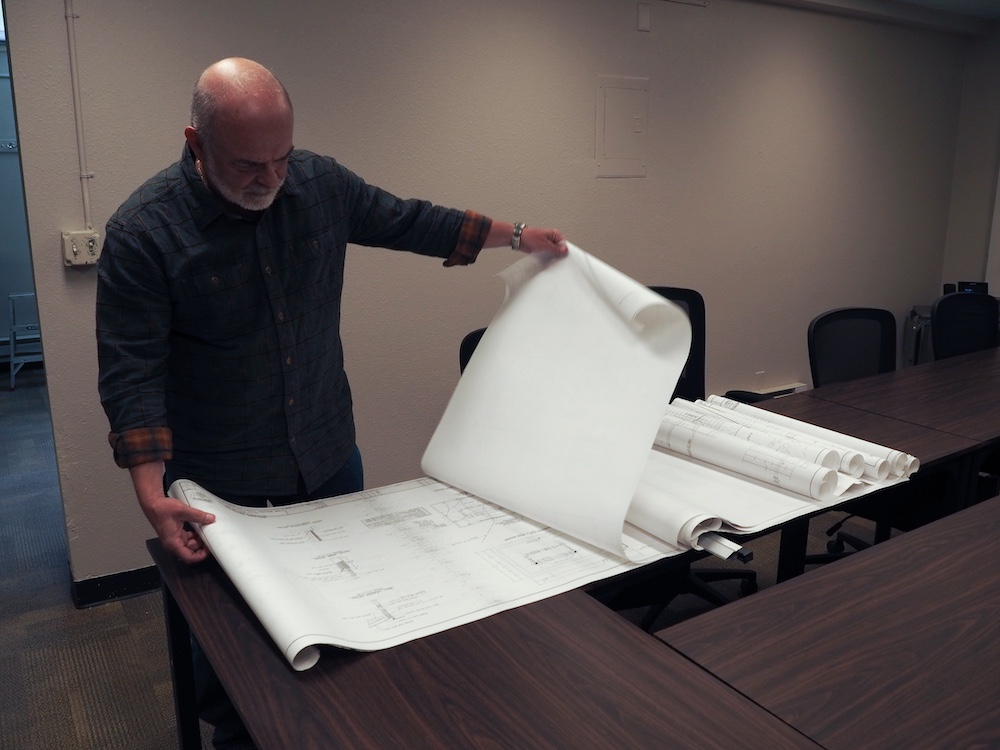
These problems existed long before TerraPower came to town, McClarnon emphasizes. But the scale of the issue, and the urgency with which it needs to be addressed, grows with the direct effects of having TerraPower employees using hotels and restaurants, and the indirect impact of new businesses, new subdivisions, and the additional workers needed for them. He doesn’t want to be the wrench in a $4 billion project, he says. “Believe me, I’m feeling the pressure of all eyes from the county and the state and the federal government looking at Kemmerer.”
The Joint Powers Board doesn’t get any tax revenue; they’re entirely funded by ratepayers and whatever grants they can get. For a long time, rates weren’t keeping up with the cost of service, and even now, they haven’t been able to cover some needed repairs. As for tens of millions of dollars: “That kind of funding for a population of 3,000 people? It’s virtually impossible,” McClarnon says. Even for what he calls the minimum “Band-Aid” option, and even if the board got a grant to cover 50 percent of it (despite not being eligible to apply for many grants because they are a separate entity from the city), sewer rates would more than double. At a certain point people will start to leave, he says, and the town would be left with fewer people paying off the same giant loan, so rates would go up again.
McClarnon has talked to state agencies, the governor, Wyoming’s federal delegation, the legislature, the county commissioners, the city of Kemmerer, the town of Diamondville, the Wyoming Business Council, TerraPower, and various grantors and foundations to raise both money and awareness. “They’re all good people and they’re trying to do their best, but they’re scratching their heads too, just like me, about where the money is going to come from,” he says. “My impression is their hands are tied in certain ways.”
When McClarnon and his wife decided to move to Kemmerer eight years ago, they were looking forward to small-town life out West, thinking it would be “nice and calm and relaxing,” a good place to retire. Now, he says, “There’s a lot of times when I wake up in the middle of the night and I go downstairs so I don’t wake the wife up, ’cause I can’t sleep ’cause I’m trying to figure things out.”
Slicing the impact assistance pie
This is the kind of problem that Wyoming’s Industrial Siting Act was passed in 1975 to address: big construction project, small town, impacts to infrastructure and public services. Per that act, the state takes 1.5–2.25 percent of the sales tax collected on industrial developments that have a material cost of $290 million or more, and redistributes the money to impacted counties, municipalities, and other entities.
To get these impact mitigation assistance funds, says Kemmerer City Administrator Brian Muir, “people who are impacted need to come and apply, and you put together a case for why.” Then they testify in front of the Industrial Siting Council in a court-style hearing, where the onus is on each party to prove they need assistance. The process can be collaborative, in that the impacted entities can coordinate their asks with each other to some extent, but it can also feel competitive, because the total amount available for distribution is fixed, and it has to get divided a lot of different ways.
Muir came to Kemmerer almost eight years ago from a consulting practice in Salt Lake City, where he worked mostly with municipalities on economic development and strategic planning. Despite those 17 years of experience and a city attorney that basically became a subject matter expert, he says, the industrial siting process was hard. Fortunately, “we had been down this road before, so we had a pretty good template. But not everyone has that.”
The city of Kemmerer will receive about $4.6 million over the course of the Natrium plant’s construction, about five or six years. Most of that will go to streets and security, the two things Muir says the city hears about the most from its residents. That includes patching potholes and putting in a turn lane by the new subdivision, hiring a new police officer, getting new vehicles and other equipment, and moving some things online at the court, in anticipation of increased workload there.
“We think it’s not enough,” Muir says. “But it is what it is.” He wishes he had made the case that the city’s share should be higher because of Wyoming’s property tax structure. The county, where the power plant is located, will receive TerraPower’s property tax payments, which Muir calls “the gift that keeps on giving.” The city, where he thinks the impacts will be higher, won’t see dime of that revenue.
Diamondville plans to similarly boost their police and street departments with their $1.4 million, and will add more money in the budget for overtime, retirement, and workers compensation. “We did pretty good,” says Diamondville Mayor Eric Backman, who recently retired from 42 years at the Naughton Power Plant. “We’re pretty excited.” But he’s not making big purchases just yet.
That’s because the money doesn’t start flowing until the project begins, rather than when the permit is issued. Diamondville learned that the hard way a few years ago, after buying a new police car in anticipation of receiving funds from a different, permitted industrial project that still hasn’t gone forward. The impact funds can also be cut off at any time, if for some reason a project that has gotten off the ground fails. So, Backman says he’s “letting the checks roll in until they build up.” It’s a waiting game anyways, since Diamondville hasn’t seen too many impacts from the project yet, he adds.
The process is different from what old timers have told him it was like during the oil and gas boom. Back then, “the big gas companies would come to the town zoning board and say ‘What do want? What do you need?’ and the board would say ‘Hey, we need a road grader,’ and they’d give us a road grader,” he says. It was more direct, more one-on-one with the companies, he muses.
Some people wish that was still the case, asking “why Bill Gates isn’t fixing our roads,” says Kemmerer Mayor Bowen. “They think we should be negotiating with [TerraPower] directly, and I vehemently disagree with that. We shouldn’t penalize TerraPower or Bill Gates or anybody for coming into our community and making it better.”
As for the industrial siting funds, “We always wish we got more, but the pie is only so big, so we do what we can with what we got,” Bowen says. He cautions patience and says that sales tax revenue from more people spending money, plus a bump in property tax from higher home values within city limits, can help fill in the gaps. The Water and Wastewater Joint Powers Board, though, “got kind of a raw deal,” he says.
They will receive $348,000, or about $5,000 a month. “I can’t do a project like that,” says McClarnon. “It’s not even enough to get us started on our engineering.” He’s frustrated by how the numbers shook out but doesn’t blame the county or the city or the hospital or all the other little towns that got impact funds, including Cokeville, LaBarge, Opal, and Afton. They’re looking out for the services they provide, he says. But he thinks the impact assistance funds should be prioritized for critical infrastructure. “People can come here if the roads are torn up. People can live here if there’s two less police officers or if [the county] didn’t expand the justice center. But people can’t come here if they can’t flush their toilets.”
The county is trying to do their part to help, says Stephen Allen, chief of staff for the Lincoln County Board of Commissioners. The board paid for a sewer study and got $4.4 million from the Wyoming Business Council to acquire a package plant—a pre-manufactured, self-contained, and modular wastewater treatment unit—to serve the Canyon Road development. It won’t fix the geriatric sewage plant in town, but at least it would ease the strain on capacity.
“But how much we step in is always the burning question,” says Melvin Shumway, a Lincoln County Commissioner whose brother’s ice cream is sold at The Opera Store. “Because you’re damned if you do and you’re damned if you don’t.” Muir, Bowen, and Lozier (who will be a county commissioner next year) all echoed the sentiment. The different jurisdictions keep each other apprised, they agreed, but try to stay on their side of the fence.
The county, which is set to receive $3.6 million from the Industrial Siting Council, has its own qualms with the process, particularly the monthly distribution that doesn’t start until construction does. It doesn’t incentivize companies to get going because they don’t have skin in the game, says Kent Connelly, who is completing his 20th year as a Lincoln County Commissioner. And for the county, having to wait for the money makes it hard to prepare.
Property taxes don’t help, Connelly adds, because they don’t get assessed at full value until the project is complete. And sales tax is redistributed around the county based on population, meaning south Lincoln County, where all the industry is, gets less than the slightly more populous but rural northern part of the county.
“We’re part of the absolute group that says you need to have a certain, I just call it base load, handed to you right up front,” says Connelly. He pitches doing away with the impact mitigation funds provided through the industrial siting process, which he says would give the county the opportunity to negotiate for a lump sum in advance. “It gives the counties and cities a little more leverage to work directly with the industry coming in, which I would be in favor of,” says Shumway.
And if companies decide not to provide impact mitigation payments, and aren’t required by the Industrial Siting Council to do so? It’s a roll of the dice, says Allen. “Your good companies want to work with you,” says Connelly.
Shumway and Connelly also see a larger role for the state in supporting small towns while promoting economic development. “Wyoming is the fifth-richest state in the United States of America [based on per capita personal income]. And what are we doing? We’re talking about cutting people’s services by cutting taxes,” Connelly says. Meanwhile, he adds, Wyoming’s investment portfolio earned $1.8 billion last year, making it the state’s largest source of revenue. “You’ve got to give some of that back to the people,” he says. “You’ve got to give us money to build.”
Unique, but not alone
TerraPower coming to town has made the mayorship a lot busier than it was in the past, says Bowen. It has put him in the path of not just local reporters, but national and international news organizations wanting to find out more about the tiny town in Wyoming set to host the first of a wave of new reactors that proponents say will revolutionize nuclear energy. The people of Kemmerer “don’t realize the spotlight they’re in, the size and scope of this project globally,” he says.
But they do know industry, and because of that, they have thoughtful and specific questions about what comes next, says Rachael Budowle. Budowle led a five-year research project funded by the Department of Energy that examined the Natrium build in Kemmerer as a case study to better understand community engagement around siting advanced nuclear energy facilities. Throughout the course of interviews with local and regional stakeholders, and a series of community engagement sessions, one of the things the team found is that the community’s familiarity with industry was more often the start of the conversation than the end.
“There’s no single Kemmerer,” Budowle cautions, and the interviews revealed the full range of attitudes about the Natrium project—from support to resistance to total uncertainty. “But no matter what people thought about it, they had questions about the how.”
Just because people say “‘We are used to this, we know how to do this, this is good,’ it doesn’t mean that they don’t care about their land, their infrastructure, and public services,” says Budowle. “[They] still raised needs and wanted to know, ‘Where will that funding and support come from?’ And that’s a real question.”
For all that development contributes—jobs, tax revenue, business opportunities, new residents, new hope—it also requires investment. While impact mitigation funds may cover the direct impacts that a project is responsible for, it’s not always enough to address everything that’s needed to accommodate that development. It’s “kind of a Catch-22, isn’t it?” Shumway says, particularly for Wyoming’s many small towns that have been grappling with aging infrastructure for a long time.
“If it’s frustrating for me with 3,000 people,” McClarnon says. “I’m sure it’s frustrating for others when they have 150 [residents]. . . . They can’t afford a grant writer. They can’t afford an engineer to come in and start doing this stuff,” and that puts them at a disadvantage competing for the grants they need.
The last time the State Land Investment Board was distributing funds for water and sewer, they had around $50 million to give from the federal American Rescue Plan Act. That would be enough to replace the Kemmerer-Diamondville wastewater treatment plant, except that it had to be distributed across the entire state, and the board received nearly $100 million in requests. “You had grown men and women crying because they couldn’t get enough money to build,” Connelly recalls.
“We have an infrastructure crisis in Wyoming,” says Connelly. “And the boom just magnifies that crisis.” But McClaron is dogged in his commitment to keep searching for solutions. He says it’s like eating an elephant—you can only do it one bite at a time. Spears isn’t in a rush either, saying “I think a lot of people think things are going to happen fast, and they’re not. It’s going to be a process.”
Birch Dietz Malotky is the editor of Western Confluence and the emerging issues initiative coordinator at the Ruckelshaus Institute.