


Mapping the Checkerboard
Illustration by Ashley Quick and captions by Birch Malotky, with consultation and data from Bryan Leonard.

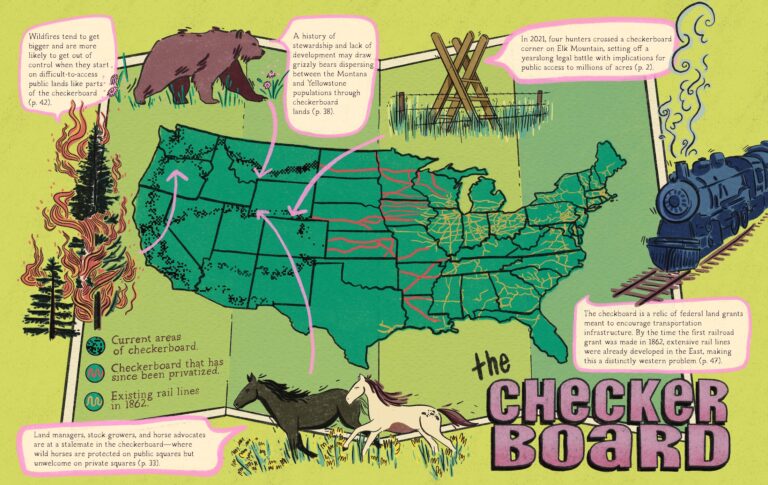
Illustration by Ashley Quick and captions by Birch Malotky, with consultation and data from Bryan Leonard.
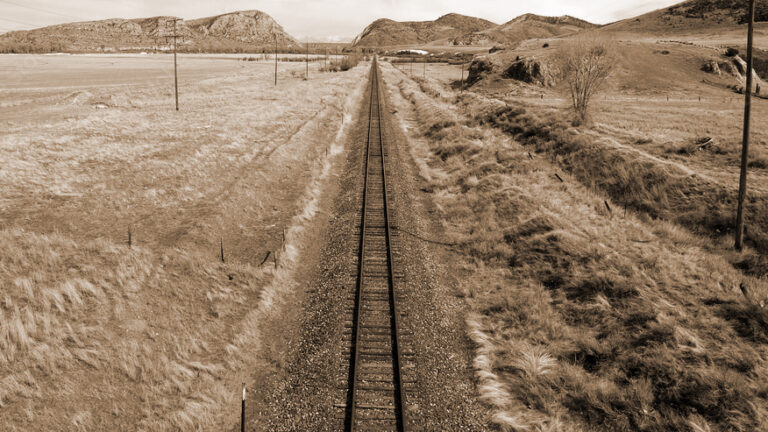
Perspective from John Leshy
Public land grants in a checkerboard pattern have a long history in the United States, and in some places their effects are still being felt and contested.
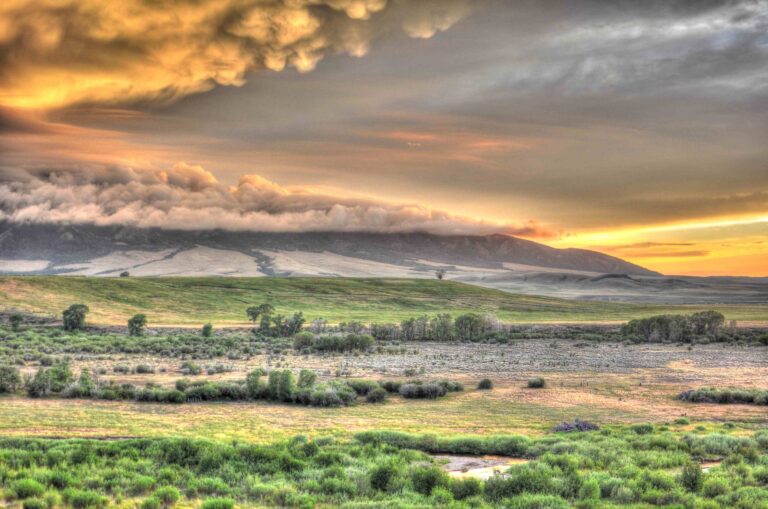
By Kelly Dunning
In my undergraduate classes, I teach that the Wyoming corner-crossing case is one of the past decade’s most significant political developments regarding conservation.
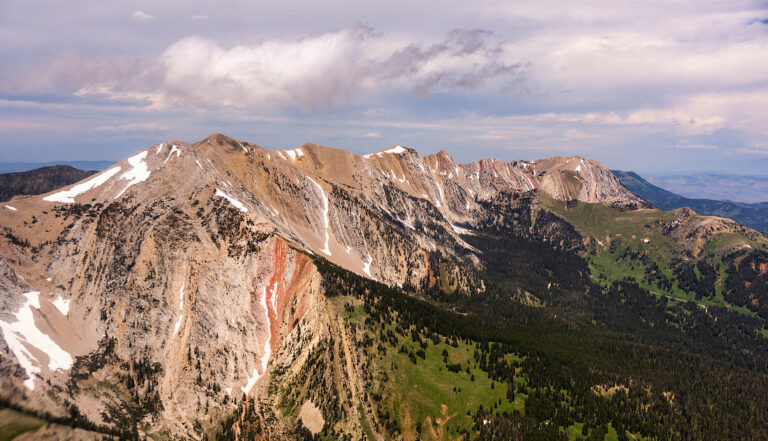
By Shawn Regan
The Crazy Mountains rise sharply from the plains of south-central Montana, forming an island of rock and forest in a sea of prairie.
By Mike Koshmrl
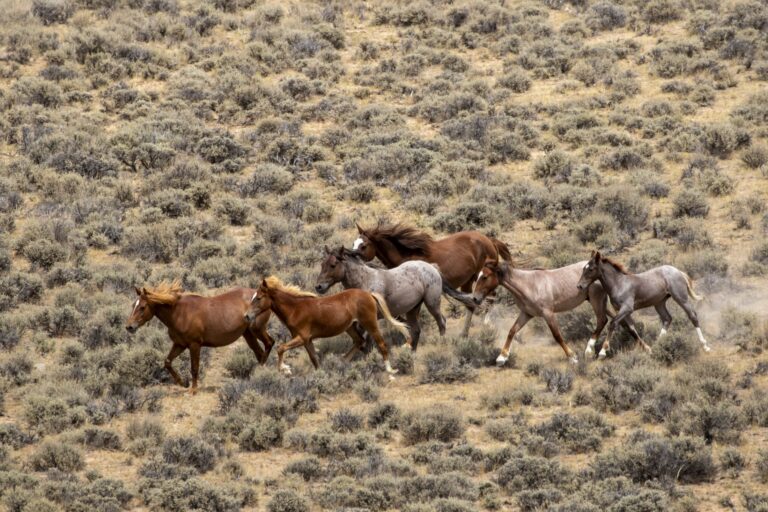
A dozen or so wild horse advocates and photographers were gathered on a ridgeline near White Mountain in August 2024 when news started spreading that federal land managers got the OK from the courts to eliminate two entire herds, and a part of another, from 2.1 million acres of the area known as the Red Desert.
By Kristen Pope
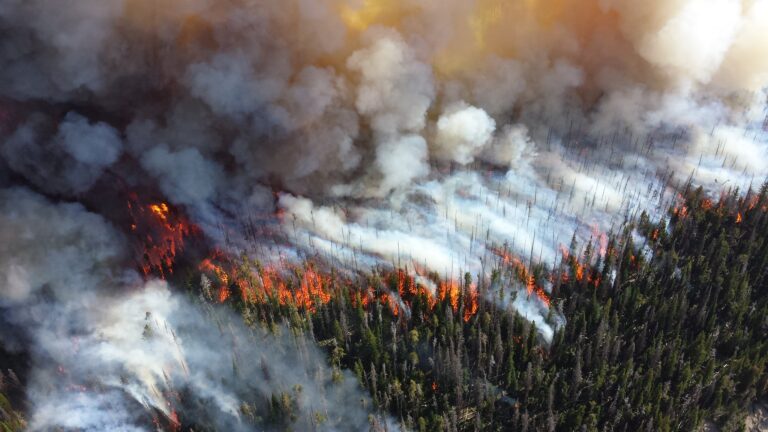
A bolt of lightning crashes down and hits some brush, which begins to smolder.

By Christine Peterson
Long before a group of hunters from Missouri hoisted a ladder over a fence in southwest Wyoming—setting off a series of headline-grabbing court cases and breathless predictions—the US government had a plan.

By Heather Hansman
The hunters, technically, never touched the ground.

Perspective from Robert B. Keiter
Yellowstone National Park—established in 1872 and widely regarded as the world’s first national park—represents the initial dominant model for nature conservation both here and abroad.

By Kristen Pope
Chip Jenkins, Superintendent of Grand Teton National Park, knows he has to pay attention to what happens beyond his park’s borders.

By Isabella Sadler
In October 2019 and 2020, helicopters hovered above the pristine waters of Yellowstone Lake,
Text and photographs by Katie Hargrave and Meredith Lynn
Captions by Birch Malotky
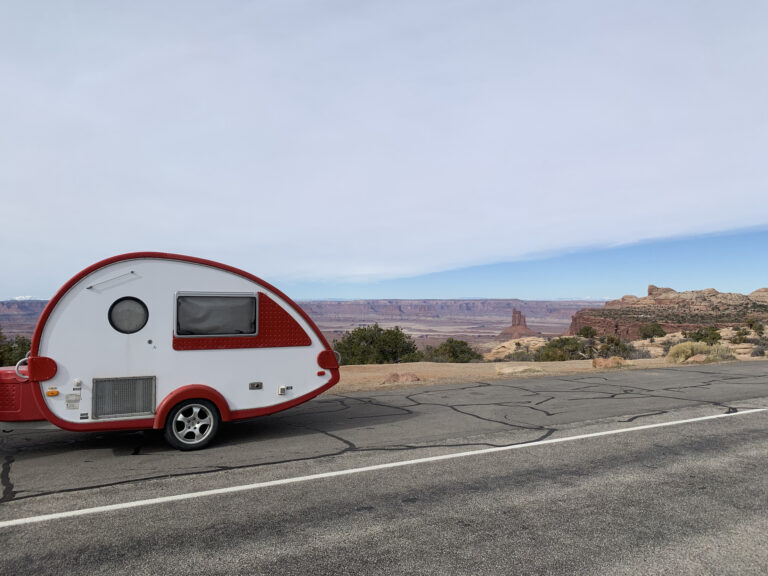
As tent campers and national parks enthusiasts, we spend a lot of time in the company of Airstreams, Winnebagos, and Jaycos, and have come to appreciate that for many, the RV makes a kind of relationship to nature possible.
By Cecilia Curiel
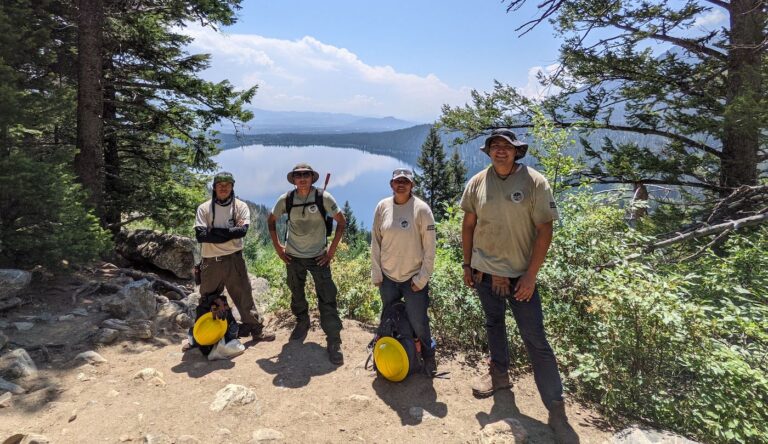
For the last several years, Shonto Greyeyes of the Diné (Navajo) Nation has made his living in some of the Southwest’s most sought-after landscapes—
By Janey Fugate
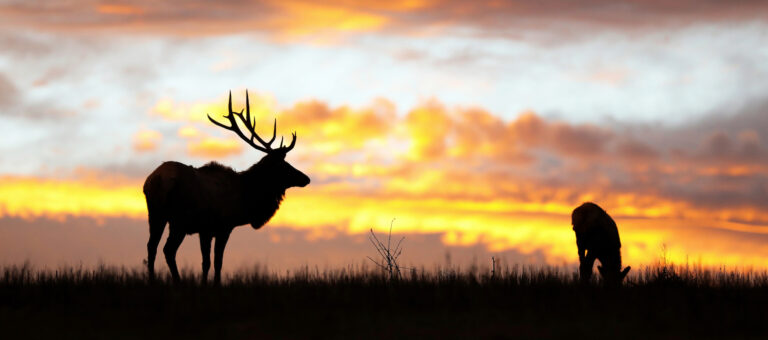
While scouting for mule deer on a chilly October evening in southeast Wyoming, the last thing I expected to see was several hundred elk.
By Molly Caldwell
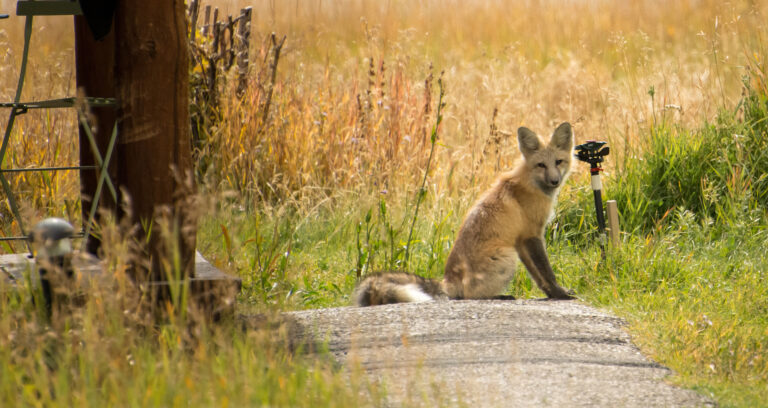
On a summer evening in a Grand Teton National Park campground, the smell of barbecue drifts along a cooling breeze, signaling dinner time to nearby red foxes.
By Wes Eaton and Curt Davidson
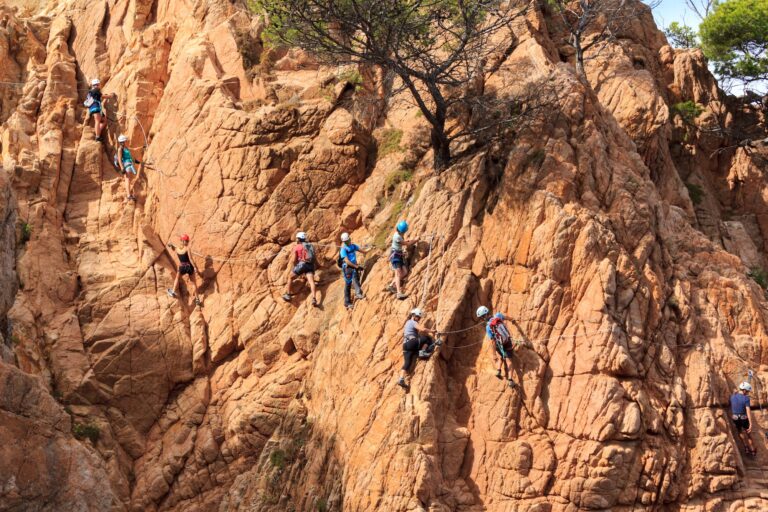
In the fall of my first semester as a visiting professor at the University of Wyoming, a stranger knocked on the half-open door to my new office and said, “There’s a town in Wyoming where people are saying that an outdoor recreation development proposal is tearing their community apart. Want to look into it with me?”
By Nita Tallent
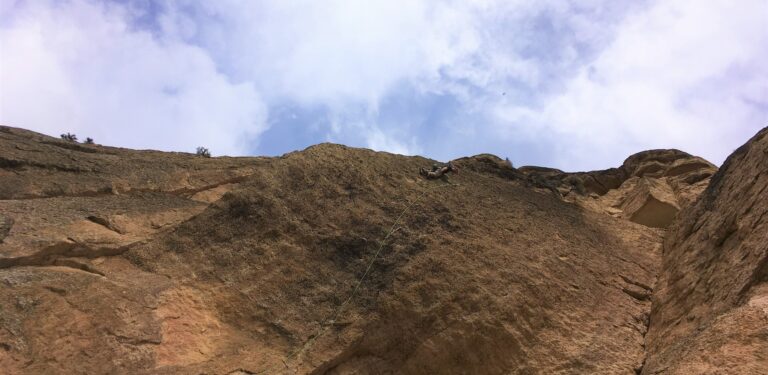
On an early summer day in 2018, a group of sport rock climbers—packs laden with ropes, quickdraws, harnesses, shoes, and chalk—clambered up a makeshift trail in Tensleep Canyon, Wyoming.
By Sam Sharp
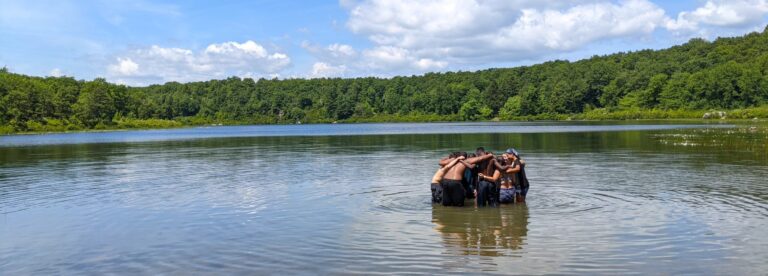
It’d been raining all day when we heard them: bullfrogs, croaking from the woods. We stopped, dropped our packs, and marched through the leaf litter to find them.
By Amy Marie Storey
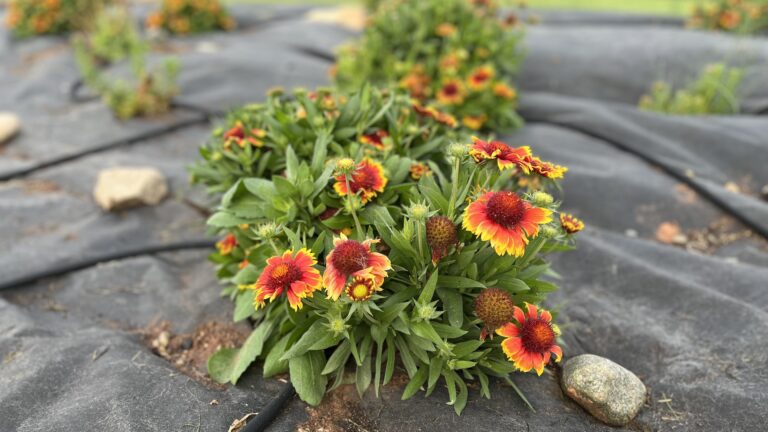
In 2019, a plain mowed field in Oklahoma’s Sequoyah State Park transformed into an acre of wildflowers. The verdant space served both visitors and pollinators.
By Kristen Pope
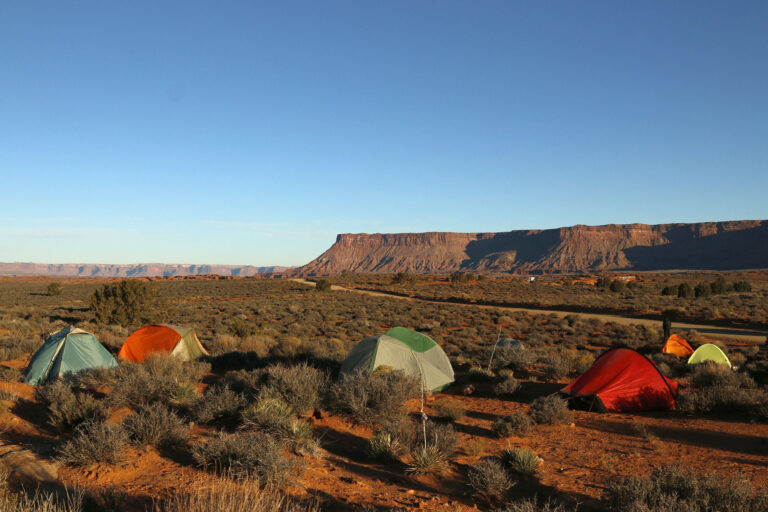
Among stunning red arches, balancing rocks, canyons, pinyon-juniper, and cacti, a hiker in southern Utah sees something white in the distance. Is it a wildflower? Approaching the “blossom,” the hiker instead finds something far less picturesque—used toilet paper and human feces.