Colorado plays the long game on nearly three million acres of state trust land
By Birch Malotky
Senator Dylan Roberts might be one of the few people in the Colorado state legislature who has been interested in state trust land for years. This widespread but generally misunderstood type of land is often lumped in with public lands, but it has a specific and unique purpose that sets it apart from national parks, forests, wildlife refuges, and so on. Trust lands—which the federal government granted to states when they became states—are managed to support K-12 schools and other public institutions, usually by making money to fund them.
Most state trust lands have been leased for agriculture, mining, and logging, but not all parcels—which are scattered all over Colorado— have good soil, or minerals, or forests. Roberts says there are “small tracts of land within cities and towns or along highways that aren’t going to be used for traditional leasing ever, and are not wildlife corridors or anything like that, so they’re not generating any economic value.” The senator, who represents a district with “some very high-cost communities that deal with significant housing challenges,” thinks that building affordable housing on these random bits of trust land could make good money for the schools while helping keep working families where they are needed.
He points to a quarter-acre plot “right in the heart of Denver that was state trust land and, for whatever reason, hadn’t been developed or sold.” The Colorado State Land Board, which manages state trust lands, built affordable housing on the parcel back in 2022, and “that became the model,” Roberts says. When he started looking at state trust land in his district, which spans much of northwestern Colorado and includes places like Vail, Aspen, and Breckinridge, he discovered several promising parcels “along already existing transportation corridors and near other residential and commercial development.” Through these efforts, one project is already moving forward in Dowd Junction, between Avon and Vail.
As the 150th anniversary of Colorado, and its state trust lands, approached, Roberts connected with a number of other legislators and organizations interested in exploring and expanding these kinds of creative uses of trust land. Together, they drafted and passed HB 1332 last spring, which instructs a working group to conduct an analysis of state trust lands and write a report with recommendations on opportunities to advance affordable housing, conservation, climate resilience, biodiversity, recreation, and renewable energy.
The act, presented as a kind of sesquicentennial performance review, is the latest juncture in a long history of Colorado figuring how to make the best out of a group of lands that were designated for a certain purpose, but weren’t optimally designed to fulfill that purpose. Throughout that time, the scattered, widespread nature of the parcels has proven both challenge and opportunity, and has required creative thinking and a reckoning with the legal and moral responsibility of managing not only for this generation or the next, but for generations far into the future.

Most people have never heard of state trust lands. Matt Samelson, an attorney with Western Environmental Law Partners who helped advocate for HB 1332 and has been appointed to the working group, admits that it’s “a pretty weird little corner of the land world.” The Colorado State Land Board Director, Nicole Rosmarino, says that most Coloradans are not aware of the specifics of her agency’s mission. But that agency is the second largest landowner in the state—responsible for 2.8 million surface acres and 4 million sub-surface acres—and its mission goes back to the founding fathers, Manifest Destiny, and a desire to measure and divide the world into a uniform grid.
Before the Constitution was even adopted, a newly independent America turned to securing its claims to the western frontier, wanting to ensure that new territories did not try to split off from the young and fragile republic, and also that they would hold to the democratic ideals of the revolutionaries. Many saw public education as essential to preparing the nation’s citizens for their civic duties, but funding was a problem. The settled, eastern states had an established tax base, but yet-to-be-formed western states did not, and the federal government was in massive debt from the war.
Cash poor but land rich, the Continental Congress passed the Land Ordinance of 1785 and the Northwest Ordinance of 1787, which divided the West into square townships, among other things. Each township was made up of 36 sections of one square mile (640 acres) each. The 16th section, located at the heart of each township, was reserved “for the maintenance of public schools within said township.”
This one provision laid the foundation for more than a century of land grants, from Ohio’s statehood in 1803 to Arizona’s in 1912. Totaling more than 80 million acres, the school land grants made during this period were nearly as large as those made to the railroads. So, this is where the question of a system designated for a purpose, but not designed for it, begins. Why were the grants made in this pattern? How, exactly, were these lands meant to support public schools? And why the 16th section?
It’s tempting to imagine that a central section was reserved for the purpose of actually hosting a schoolhouse, such that each township was organized around its civic core and distributed across the countryside with mathematical precision. It does seem to fit with the intellectual zeitgeist of the revolutionaries, who were enamored of rationalism and the idea of an agrarian democracy. But if that was the intent, realities on the ground rendered it more symbolic than practicable, creating a mismatch between how the lands were distributed and how they came to be managed that has created challenges for administrators ever since.
At the least, it seems the Continental Congress did intend for there to be a school in every 36-square-mile township in the West, which explains why the grant pattern was one parcel in each township instead of a single block of school trust lands. The evidence is in the way that the initial grants to new states were directed to township-level governments for the exclusive benefit of that township’s schools. The vision was not a statewide, state-administered school system, where land or a school in one township could support a broader area, but rather one characterized by self-sufficiency and local control.
This likely reflects, in part, post-revolutionary uneasiness with centralized government, but it was a fundamental flaw in both purpose and design. The reality of settlement and western landscapes meant that population centers formed around travel corridors, arable land, military outposts, and other strategic features, rather than the artificial boundaries of the rectangular survey system. This left plenty of townships lacking people, governments, and the need for a school.
In response, Congress changed to whom the grants were made, and for whose benefit. By the mid-1800s, it was granting land to state governments rather than local ones, for the support of schools statewide rather than exclusively for schools in the township where the land was located. But which lands were granted did not change, so the basic pattern of reserving a little bit of land all across the state persisted. This created a kind of checkerboard land ownership that people today sometimes call “the blue rash” because of the way that state trust parcels—light blue on many maps— pock the surface of many western states.
The scattered nature of these lands is the first challenge that trust land managers have had to contend with over the years. Smaller, discontinuous parcels don’t offer the management efficiencies that larger parcels do, and they are more vulnerable to impacts from the lands around them. “The checkerboard makes it hard to have consistent management,” Samelson says, “because the surrounding uses and surrounding ownership may just have a very different perspective than the state does.” For example, he asks, “How do you manage a little 640-acre parcel inside of a Wilderness Study Area? Are you actually going to generate money from that?”

In Colorado—which received sections 16 and 36 in each township “for the support of common schools”—the checkerboard mostly overlays the eastern plains, with far less state trust land appearing west of the Continental Divide. That’s partially because Colorado didn’t receive sections that were already spoken for, including a lot of the Ute reservation, which at that time covered roughly the western third of Colorado.
In today’s Southern Ute and Ute Mountain Ute reservations, there are still no state trust lands—a sharp contrast to many states. A Grist report found that Utah, for example, claimed more than half a million acres, or 5.7 percent, of the Uintah and Ouray Reservation, while the Leech Lake Reservation in Minnesota is nearly 20 percent state trust land.
In answer to the difficulties of the checkerboard, Colorado has, over the years, successfully traded away many of its trust parcels that were surrounded by Bureau of Land Management and Forest Service lands, and pursued consolidation. It now holds title to several properties of 25,000 acres or more, including State Forest State Park and a number of ranches. But land exchanges can be complex and slow, and require a landowner who is willing to trade, so plenty of those 640-acre sections remain.
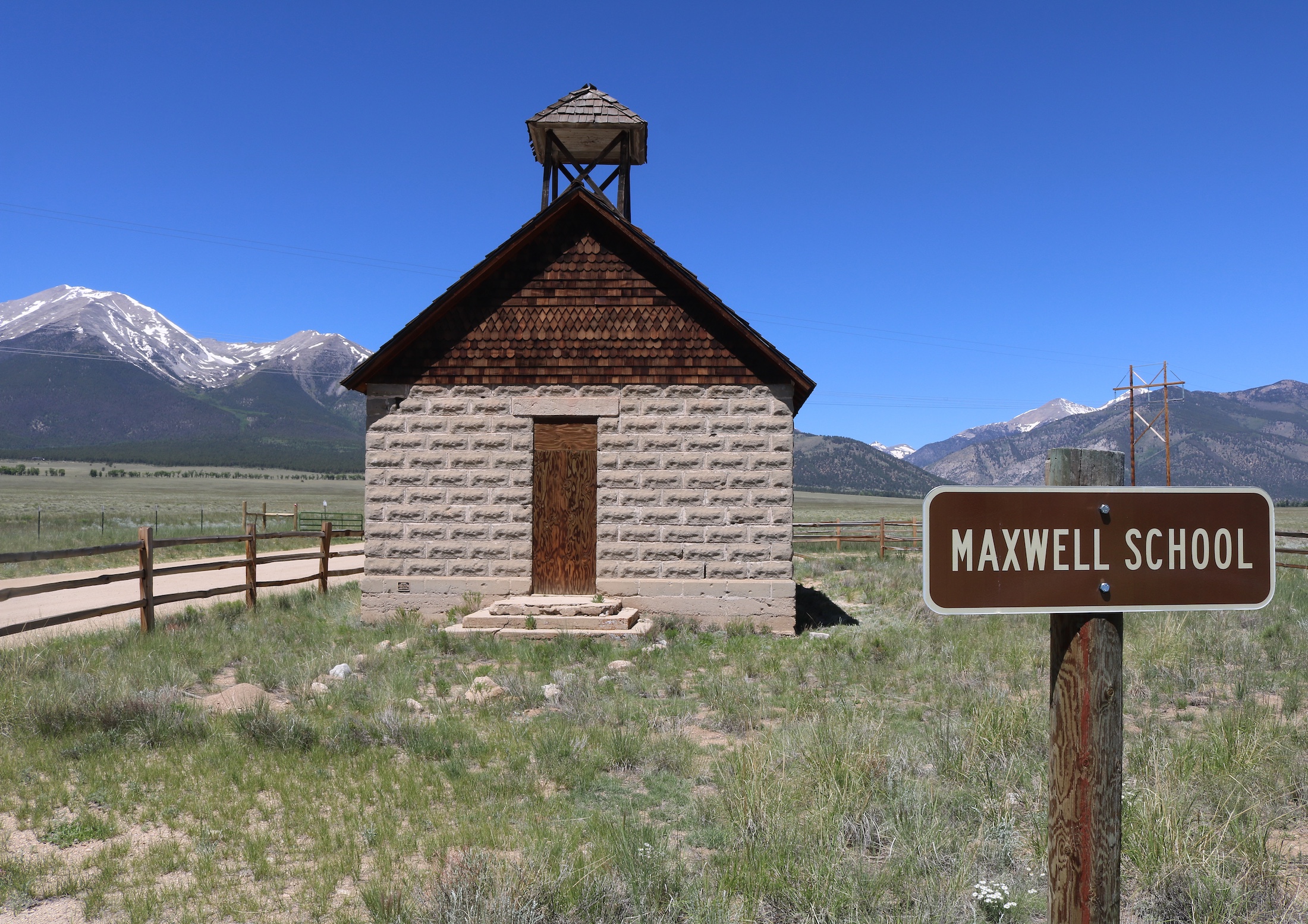
As to the question of how the reserved sections were meant to support schools, the 1967 Lassen v. Arizona Highway Department Supreme Court case implies that at least some of the granted lands were intended to be used as building sites for schools. Indeed, the Maxwell Schoolhouse in Buena Vista still stands today as a historic site on Colorado trust land. But the court also goes on to say that because “the lands were obviously too extensive and too often inappropriate” for “actual use by the beneficiaries…the grant was plainly expected to produce a fund, accumulated by sale and use of the trust lands, with which the State could support the public institutions designated by the [Enabling] Act.”
This practice of funding schools through leasing and sale was well-established in the colonies when the Land Ordinance passed in 1785 and is, for the most part, exactly what happened. The states created before 1851, like California, sold all or most of their state trust lands, with at least one case of granted lands being given to teachers in lieu of salary. The younger states tended increasingly towards retention and leasing. Colorado, which was formed in 1876, still holds 62 percent of its original granted lands, with older states retaining as little as 3 percent and younger states as much as 91 percent. For the states that retained their granted land, leasing reflected the primary industries of the 19th and early 20th centuries—farming, grazing, logging, and mining.
Most states also developed a permanent fund to house trust land revenue (from sales and leasing), the earnings from which could be distributed to schools. Colorado was the first state required to do so. Over time, administration of these land grants evolved into, and has been interpreted by courts as constituting, formal trust arrangements, in which the state (the trustee) has the legal responsibility to manage the land and the permanent fund (the trust corpus) with undivided loyalty, good faith, skill, and diligence, for the benefit of public schools and other named institutions (the beneficiaries).
In Colorado, 95 percent of trust lands benefit K-12 education, with smaller grants supporting public buildings, the penitentiary, and state universities. Another pair of trusts, called the internal improvements and saline trusts, benefit the state park system. This pair of trusts includes land within 13 of Colorado’s state parks, for which the parks themselves are the beneficiaries but have to contract with the State Land Board to use. Samelson calls this situation “perhaps unduly complicated,” and it’s part of why he and others first got involved with HB 1332.
Across all Colorado state trust lands, leasing generated $230 million last year, with the permanent fund producing another $50 million in interest. About half that went back into growing the permanent fund and half went to the Department of Education’s Building Excellent Schools Today (BEST) program. The program supports school construction and renovation, fixing things like boilers and roofs, particularly in rural Colorado where there is less of a tax base.
While many states, Colorado included, have at times taken their trust responsibility to mean maximizing revenue generation, this management strategy can be in tension with the duty to sustainably manage trust assets, such that they can continue to benefit future generations of schoolchildren in perpetuity. This tension came to a head in Colorado in 1996, when voters approved a constitutional amendment that asserts “that economic productivity of all lands held in public trust is dependent on sound stewardship, including protecting and enhancing the beauty, natural values, open space, and wildlife habitat thereof,” and instructs the board to manage state trust lands to “produce reasonable and consistent income over time.” Amendment 16 also created a 300,000-acre Stewardship Trust “to preserve the long-term benefits and returns to the state” by managing the lands specifically for their natural values.
The ballot measure was a sharp rebuke to the maximization-focused management of the time, which had led to a series of high-profile controversies around proposed uses of trust lands—including what would have been the nation’s largest commercial hog farm, sited along the South Platte River near billionaire Phil Anschutz’s hunting lodge.
Amendment 16 was accused of violating the trust mandate, but the courts ultimately found that encouraging “sound stewardship” and “reasonable and consistent income” was not corrupting the purpose of the State Land Board, but rather providing guidance on a management approach for achieving that purpose—one that upholds the long-term health of the trust.
As to the final question of why the founding fathers reserved the 16th section specifically, the Supreme Court justices write in Cooper v. Roberts that it was meant “to plant in the heart of every community…grateful reverence for the wisdom, forecast, and magnanimous statesmanship of those who framed the institutions for these new States.” It would also promote “good governance and the happiness of mankind by the spread of religion, morality, and knowledge.”
Apart from this largely symbolic gesture, it was likely just as good a method as any other to systematically grant largely unexplored land to unknown future states. It still can’t be called optimal—while states ended up with some land that was excellent for generating revenue to fund schools, they also had plenty that was steep and dry, lacking trees or minerals, or too far away from roads, rivers, and towns to be useful. Congress did give more land to the more arid states (two sections per township and then four), but the disparate value of granted lands, in addition to their small, scattered nature, has remained a challenge through centuries of trust land managers trying to meet their constitutional obligation. For most western states today, a small percentage of the granted sections generate the majority of revenue, while the rest produce more marginal incomes, or in some instances, no money at all.
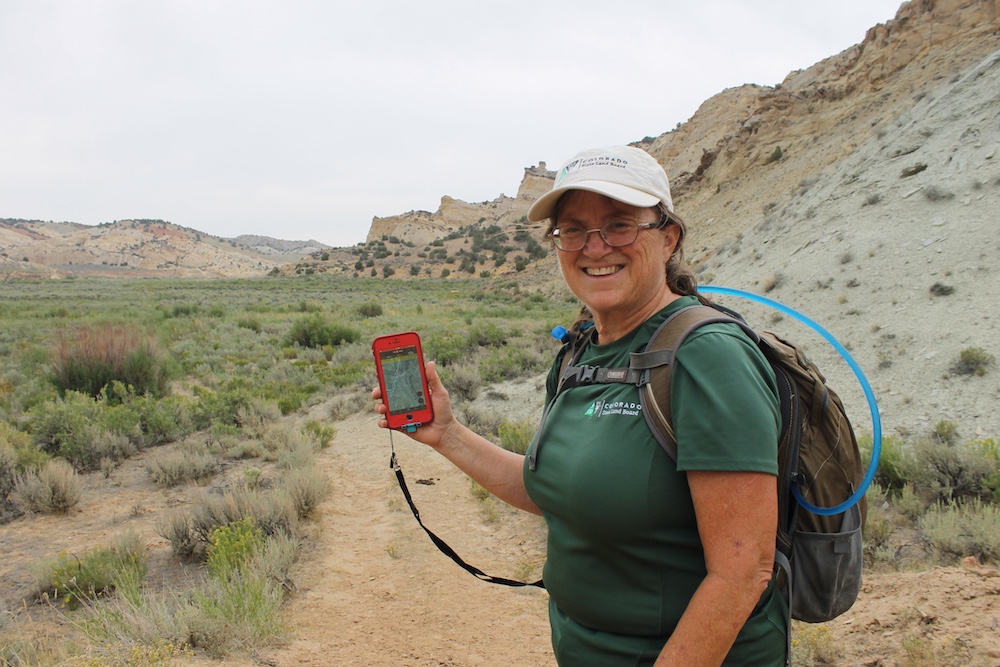
But Rosmarino, the Colorado State Land Board director, says we have to be careful about using too broad a brush on the issue. The distribution of trust lands is an advantage, she says, for the opportunity it affords to build relationships all across the state, with local governments and lessees that live and work close to the land. Isolated sections can be integral parts of larger projects, from multigenerational ranches and farms to new, utility-scale renewable energy projects. They can also, with creative thinking, support “projects with a pretty small footprint that have provided big results financially for the State Land Board,” as well as the community and the environment, she says.
For example, a sale of 400 acres of state trust land surrounded by development in Erie yielded $40 million for the state’s permanent fund. In southeast Colorado, the City of Lamar plans to purchase electricity from a solar garden being built on 30 acres of trust land. And there is that quarter-acre lot in the middle of Denver with the affordable housing development that inspired Senator Roberts.
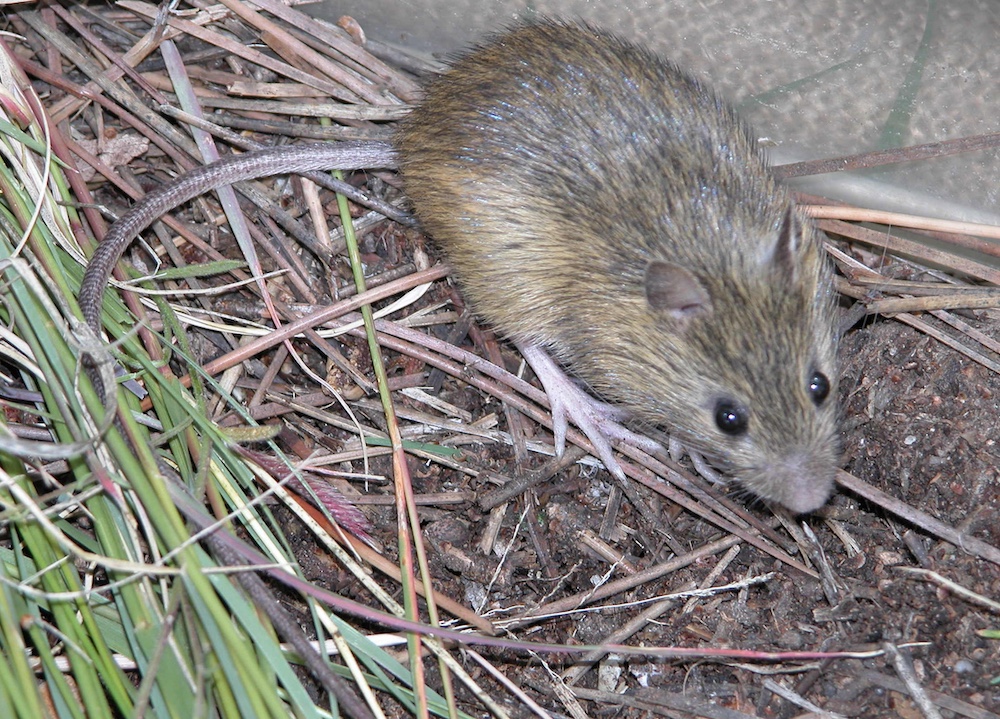
Colorado also hosts some of the West’s only ecosystem service leases on state trust land. In one case, when a water utility needed to offset the impact a new reservoir would have on the federally threatened Preble’s meadow jumping mouse, the State Land Board restored and enhanced 222 acres of habitat on state trust land. This created the state’s first species conservation bank, which has generated around $750,000. In another case, a 200-acre floodplain on the South Platte River became a wetland mitigation bank that offsets gravel mining elsewhere in the watershed. That lease has generated more than $2 million for Colorado’s schools, on a property that was appraised for less than $200,000. For both the jumping mouse and wetland mitigation projects, grazing was able to continue on most of the property.
These kinds of projects can turn the challenge of the checkerboard into an asset, says Mindy Gottsegen, the conservation services manager who developed and runs the State Land Board’s ecosystem services line of business. That’s because a diverse land base can mean access to diverse markets, and the State Land Board is continuously expanding its leasing program to take advantage of that dynamic.
Of course, legacy industries remain integral to Colorado’s school trust—96 percent of land is leased for farming and grazing, and 82 percent of revenue comes from mineral extraction, particularly oil and gas development. But, Gottsegen says, “We have areas of the state where we think there’s no oil and gas, and it’s very arid. Now all of a sudden, we know that there are big helium reserves there, and we have access to that because of the checkerboard pattern.” All it takes is for a new market to develop, and a property that didn’t seem like it had much to offer 30 years prior is suddenly worth a lot more.
Amendment 16’s intergenerational outlook helps preserve these kinds of opportunities. By dialing down the pressure for immediate, maximized return, the amendment allows managers to forego near-term development and keep their options open on any given parcel of land. And the emphasis on sound stewardship has provided fertile ground to explore leasing for things that preserve or enhance the value of land while still making money for the beneficiaries, like regenerative grazing and wildfire restoration for carbon credits, which Gottsegen is currently working on.
The founder of a land trust and a former advisor to the governor, Rosmarino sees her position, and these kinds of projects, as “a great convergence of my background in conservation and agriculture, and also my interest in being really entrepreneurial in generating revenue for a good cause.” That’s why she welcomes working with the State Trust Lands Conservation and Recreation Work Group, which was formed by the passage of HB 1332 last spring. “We really see it as an opportunity to showcase how innovative we are trying to be,” she says, adding that “creative solutions can come from anyone and anywhere.”
Senator Katie Wallace, who co-sponsored HB-1332 with Senator Roberts and Representative Karen McCormick, says that “the goal of the working group is to see how state trust lands can support conservation, climate resilience, biodiversity, and recreation, while still honoring and uplifting the duty to generate reliable revenue for our public schools.” The bill’s proponents hope it can provide support for the State Land Board’s existing efforts and inspire new projects, particularly by “pulling in a lot more voices from a lot of different perspectives,” says McCormick.
The State Land Board is “a pretty lean organization, and because of its small size and the sheer amount of land they have, a lot of times they end up having to be reactive to proposals coming from outside entities,” says Samelson. They have still managed to do some really exciting and creative work, says John Rader, who was part of the coalition that advocated for the bill, but “there hasn’t been a comprehensive, holistic approach that gathers stakeholder input,” he says.
So, the bill establishes what Wallace and McCormick both call a kind of mind trust, featuring 24 members representing the trust beneficiaries, agriculture, oil and gas, conservation, recreation, affordable housing, and the Southern Ute and Ute Mountain Ute tribes, as well as experts in economics, law, and real estate. “We kept adding seats to the working group,” says McCormick, “which tells you that folks saw the importance of having their voices in the mix.”
The group, which only just convened for the first time in October, is instructed to inventory state trust lands for their potential to support these various goals—for example by identifying parcels that contain habitat for Colorado’s species of great conservation concern—and to analyze the various tools and mechanisms available to achieve them—like conservation leases and land swaps. They will present their recommendations in an interim report by March 16 and a final report by September 1, 2026.
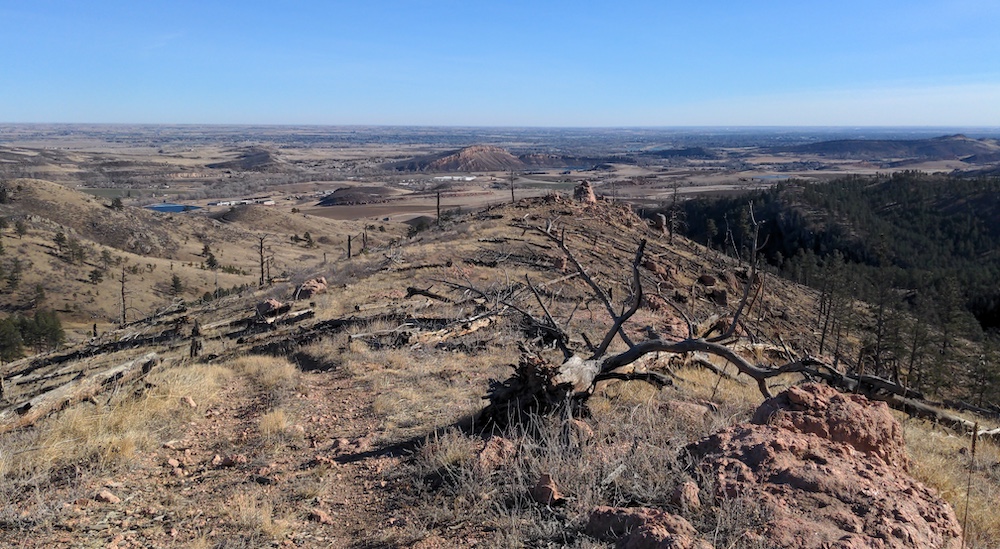
The idea, Samelson says, is to create space to have a proactive conversation “outside of the pressure cooker of the capitol dome,” where a wide variety of folks can mull over all the different options and available avenues “and come back with a package that, hopefully, has been thoroughly poked at from different angles.”
All the bill’s sponsors and proponents emphasize that the intent of the group is not to displace or discount legacy users of state trust lands, but rather to look in the margins of what’s already happening for new opportunities to make the whole corpus of trust lands work for the beneficiaries. “How do we look at those parts of the corpus that aren’t oil and gas, or agriculture?” asks Wallace.
Samelson, for example, is interested in what he calls inholdings and edgeholdings—those tricky 640-acre parcels that can be hard to manage on their own. Rader, who is the public lands program manager for the San Juan Citizens Alliance, is also interested in inholdings, particularly in nearby Lone Mesa State Park. “That’s our small window into state trust lands,” he says, “and from there the conversation just started ballooning outward.”
The twist with those Lone Mesa inholdings, and state trust land in 12 other Colorado state parks, is that they’re part of the land grant that was made to benefit the state park system. So, you end up with a weird situation “where Colorado Parks and Wildlife [which manages state parks] is both the lessee and the beneficiary,” says Rader. Since it doesn’t make sense for Parks and Wildlife to pay rent that would be given back to the agency, they enter into beneficial use agreements, often short term, where no money is exchanged. On the state parks side, “that doesn’t give us a lot of certainty about longterm management for conservation and recreation,” says Rader, “and it doesn’t generate a lot of revenue for the State Land Board, so it’s kind of this double inefficiency.”
Thinking about creative management solutions for the lands that benefit state parks is one of the working group’s first tasks. Also intended for the interim report is a look at the Stewardship Trust that arose from Amendment 16. The amendment “says that the lands are supposed to be managed to preserve and enhance their natural values,” says Rader, “but it doesn’t really define natural values. It doesn’t tell the state land board how to manage for them. It doesn’t say what uses are compatible or incompatible with those natural values.” He’s hoping the working group can define some terms and establish clearer procedures. Beyond those specific trusts, Rader just wants to know what’s out there in terms of creative uses of state trust land, particularly when it comes to making money while conserving the land.
It’s a timely conversation, in part because “we are in a really tough budget situation and we have been for a really long time,” according to Wallace, “and that makes any revenue stream absolutely irreplaceable.” But more than immediate need, everyone seemed to feel that this moment—150 years after Colorado first received its trust lands, and 30 years after Amendment 16 established the twin pillars of sound stewardship and reasonable and consistent income—was simply ripe for reflection.
“There hasn’t been a comprehensive look at how we are using our state trust lands in quite a long time,” says Roberts, “and the practical reality of our state is changing. We’re struggling with issues like housing and wanting to promote more outdoor recreation and protect the environment, and this is a chance to get some of the best and brightest minds together to look at the opportunities to maximize the value of every state trust land—not just the big parcels, but the small parcels too.”
Birch Malotky is the editor of Western Confluence magazine and writes from Laramie, Wyoming.
Header image: Lowry Ranch. (Raquel Wertsbaugh)